Electronics » Voltage Regulators and Power Supplies » Step-Up (Boost) Voltage Regulators »
24V, 50mA Isolated Step-Up Voltage Regulator U5Z9F24
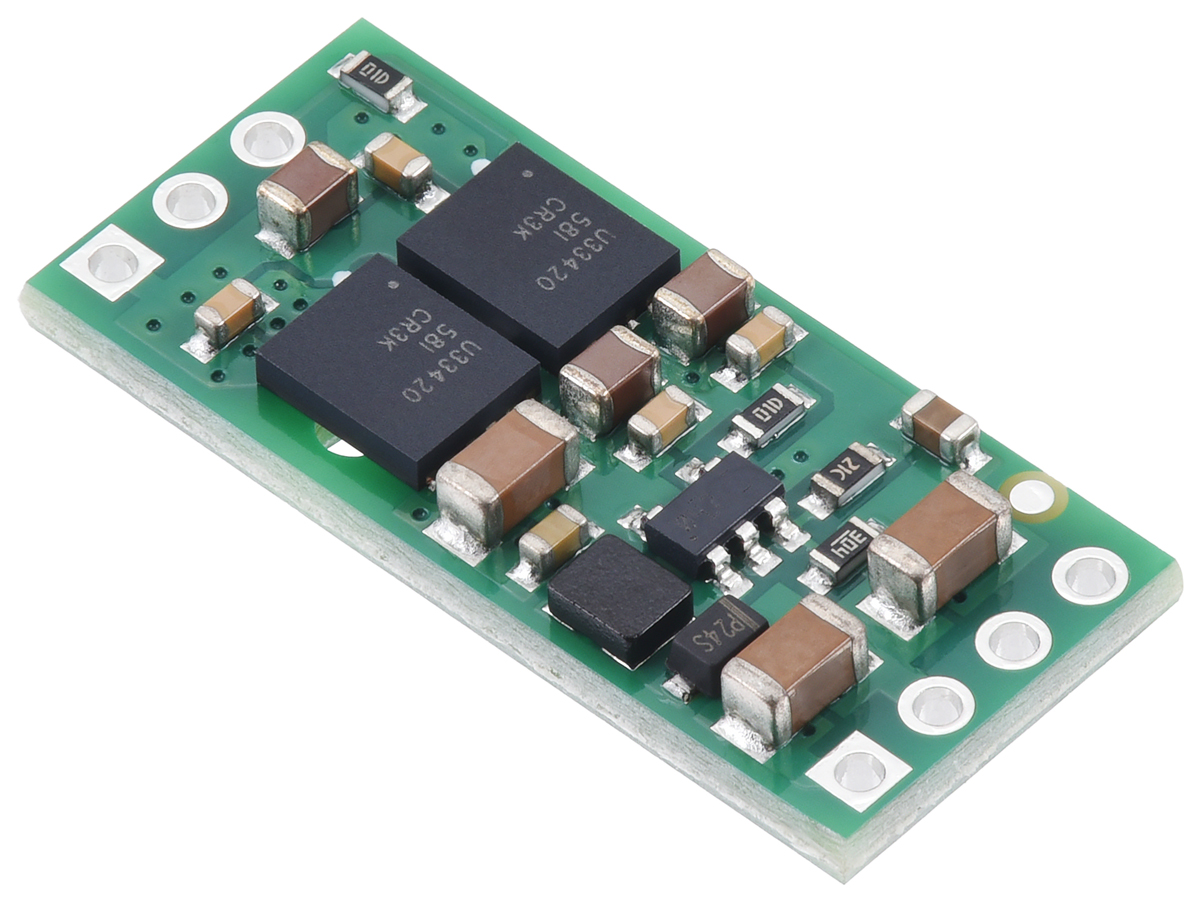
This step-up voltage regulator consists of a pair of isolated DC-to-DC power modules in front of a step-up (boost) regulator. This enables up to 50 mA continuous at 24 V out from a 5 V input with full galvanic isolation between the input and output. The 5 V output of one isolation IC and the 10 V output of the pair of isolation ICs in series are also available.
| Input voltage | Output voltages | Max continuous output current | Size |
|---|---|---|---|
| 4.5 V to 5.5 V | 24 V | 50 mA* | 0.45″ × 1.0″ |
| 10 V | 175 mA* | ||
| 5 V | 300 mA* |
* Max current per channel when the other channel currents are zero.
Alternatives available with variations in these parameter(s): output voltage Select variant…
 Compare all products in Step-Up (Boost) Voltage Regulators or Isolated DC-DC Power Modules.
| Description | Specs (12) | Pictures (10) | Resources (4) | FAQs (0) | On the blog (0) | Distributors (0) |
|---|
Overview
This step-up voltage regulator consists of a pair of Texas Instruments UCC33420RAQR isolated DC-to-DC power module connected in parallel on their input sides and in series on their output sides followed by a 12 V or 24 V boost regulator. The series arrangement of the UCC33420 converts a 5 V input to 10 V with full galvanic isolation between the input and output, and then the 10V is boosted to the final output voltage of either 12 V (U5Z9F12 version) or 24 V (U5Z9F24 version), depending on the regulator version. The 5 V and 10 V outputs of the UCCC33420 modules that power the boost regulator are also brought out, as shown in the block diagram below; these can provide up to 300 mA or 175 mA continuous, respectively, when there is no current draw on any of the other output channels (using the 5 V output will reduce available current from the 10 V and VOUT outputs). Unlike non-isolated regulators, the output ground (GNDO) is effectively independent of the input side (GNDI), which can be useful for preventing ground loops and avoiding ground currents that can cause unpredictable system behavior or even lead to damage to potentially expensive components.
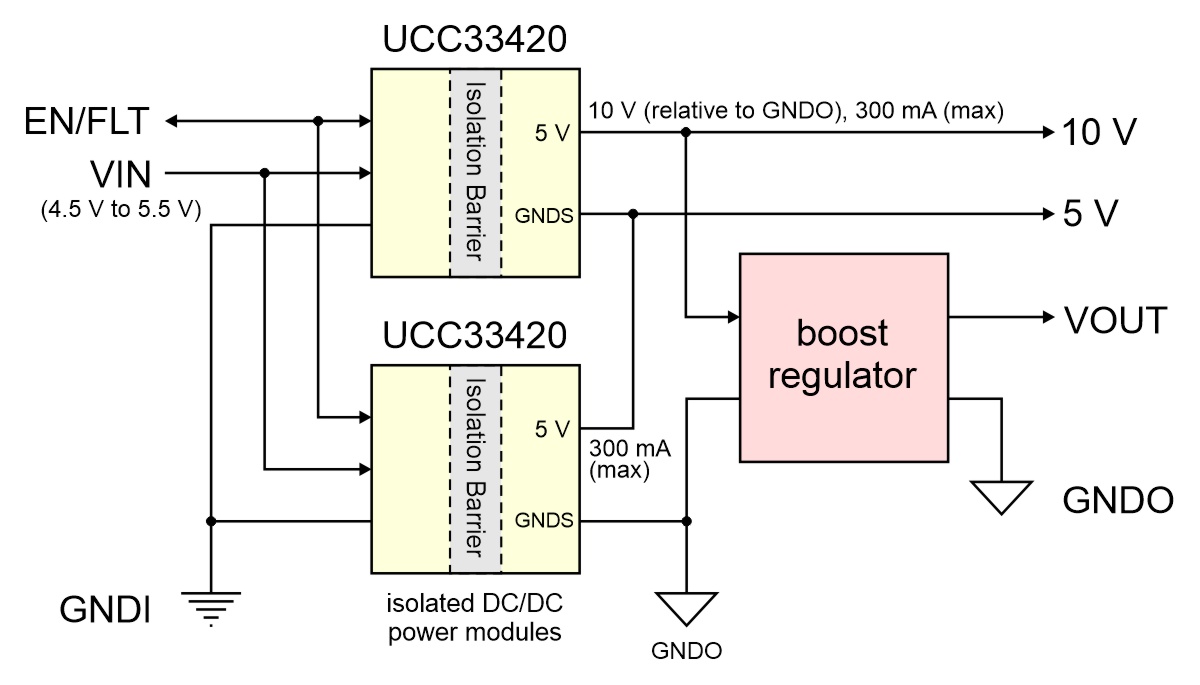 |
Block diagram of the Isolated Step-Up Voltage Regulator U5Z9Fx. |
|---|
Thermal considerations and limitations
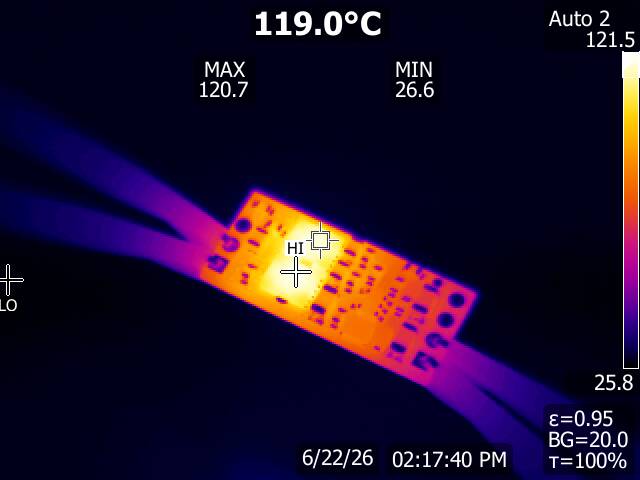 |
Thermal image showing the two isolation modules heating up during operation. |
|---|
The available output current is limited by the thermal dissipation of the two isolation modules. Because they are close together on a small board, the 300 mA maximum current available from one module drops to approximately 175 mA when both modules are active (i.e. when current is drawn from the 10V or 12/24V outputs). However, if the heat can be dissipated, for example through forced airflow or applying sufficient heat sinking, the module can deliver double the current (and therefore power) of the similar U5Z6F12 regulator based on a single isolation module. The limit subject to sufficient heat dissipation is 300 mA from the 10V output or 200 mA from the 12V output (100 mA max for the 24V version).
Details for item #5770
|
|
|
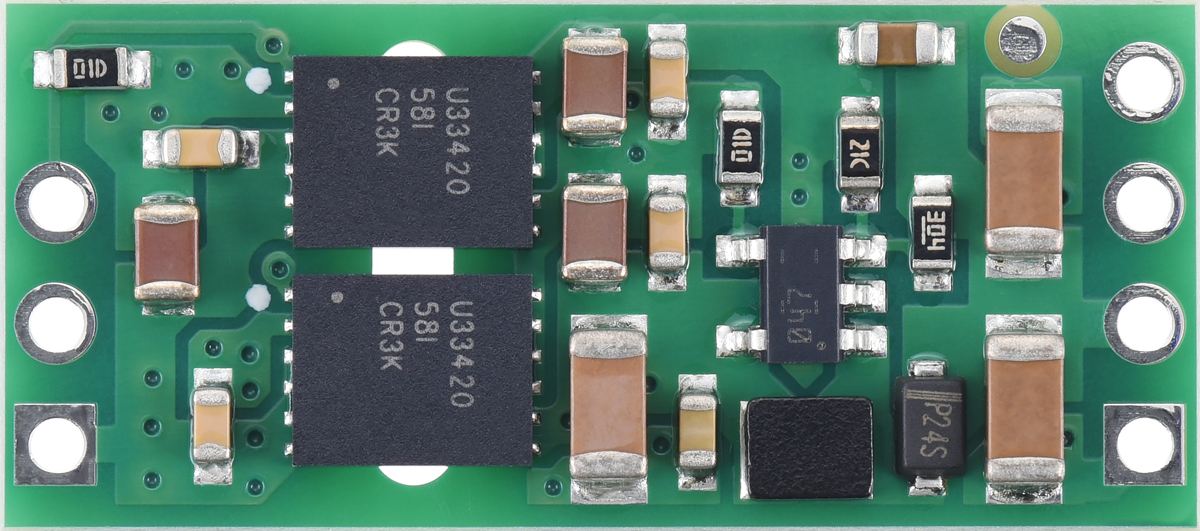
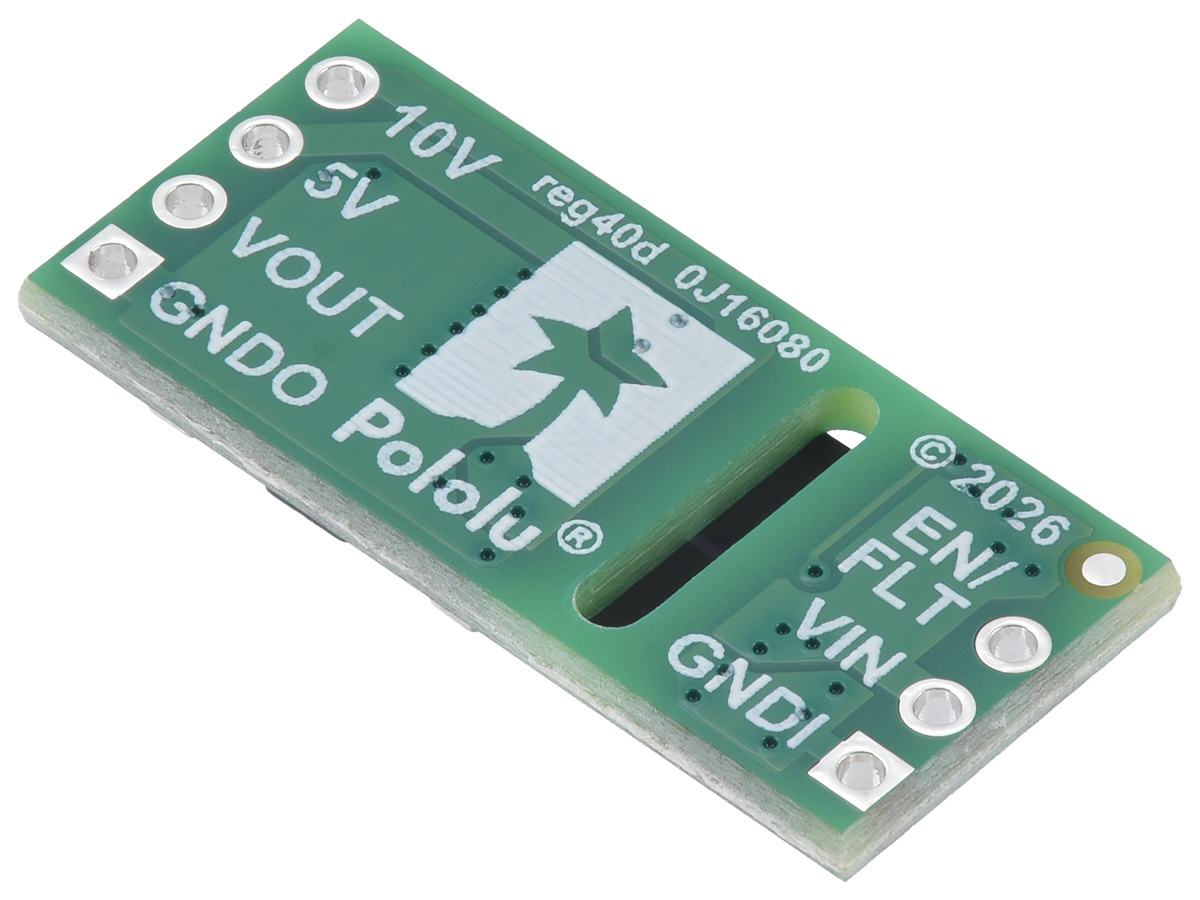
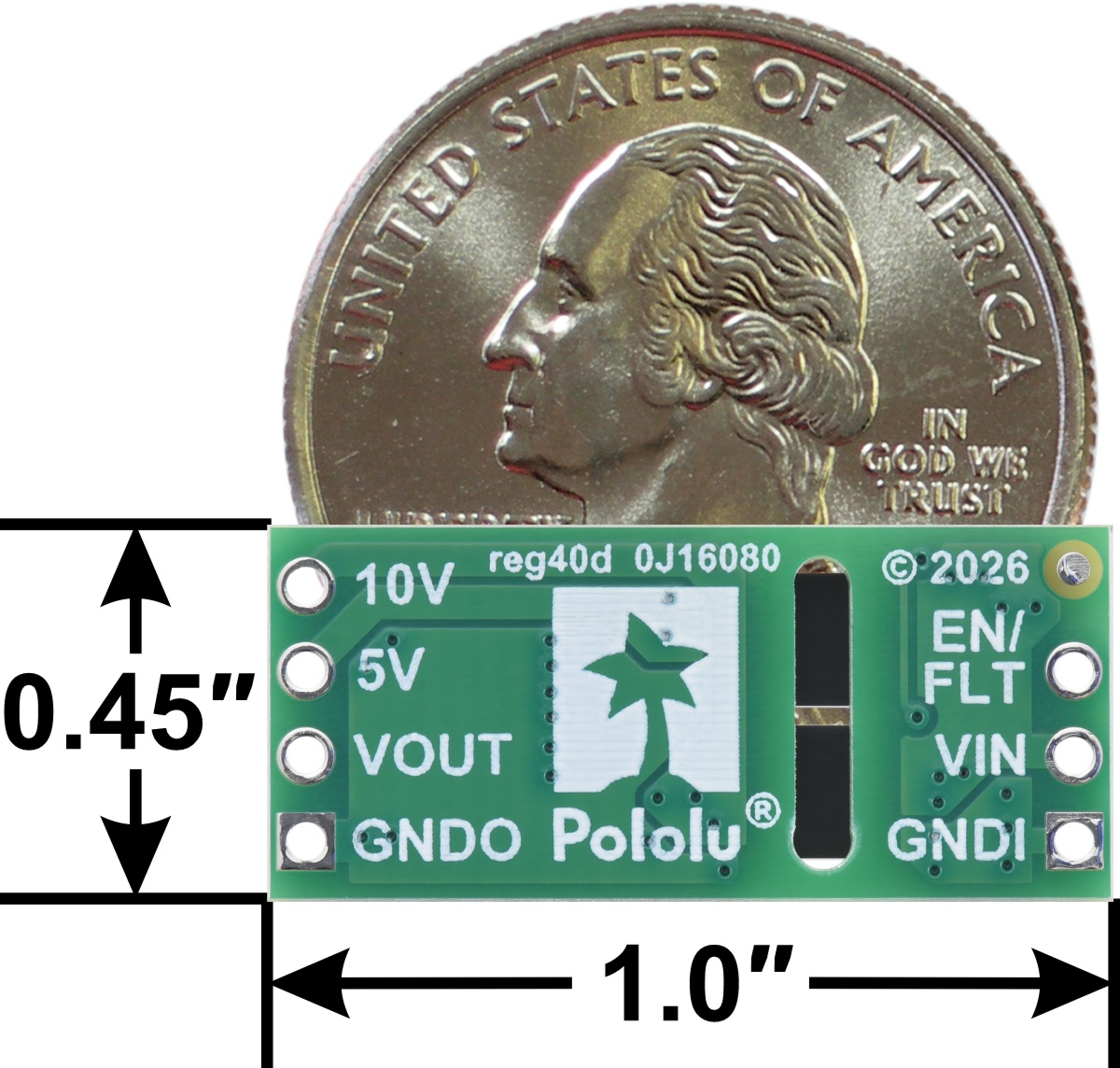
Features and specifications for the 24 V U5Z9F24
 |
- Input voltage: 4.5 V to 5.5 V
- Outputs:
- 24 V (with 4% accuracy, up to 50 mA continuous (when 5V and 10V output currents are zero)
- 10 V (with 4% accuracy), up to 175 mA continuous (when VOUT and 5V output currents are zero)
- 5 V (with 4% accuracy), up to 300 mA continuous (when VOUT and 10V output currents are zero)
- Galvanic isolation between input and output using a pair of Texas Instruments UCC33420, which has the following isolation ratings:
- 3000 VRMS basic isolation rating
- 820 VRMS maximum working isolation voltage
- See the UCC33420 datasheet for more information
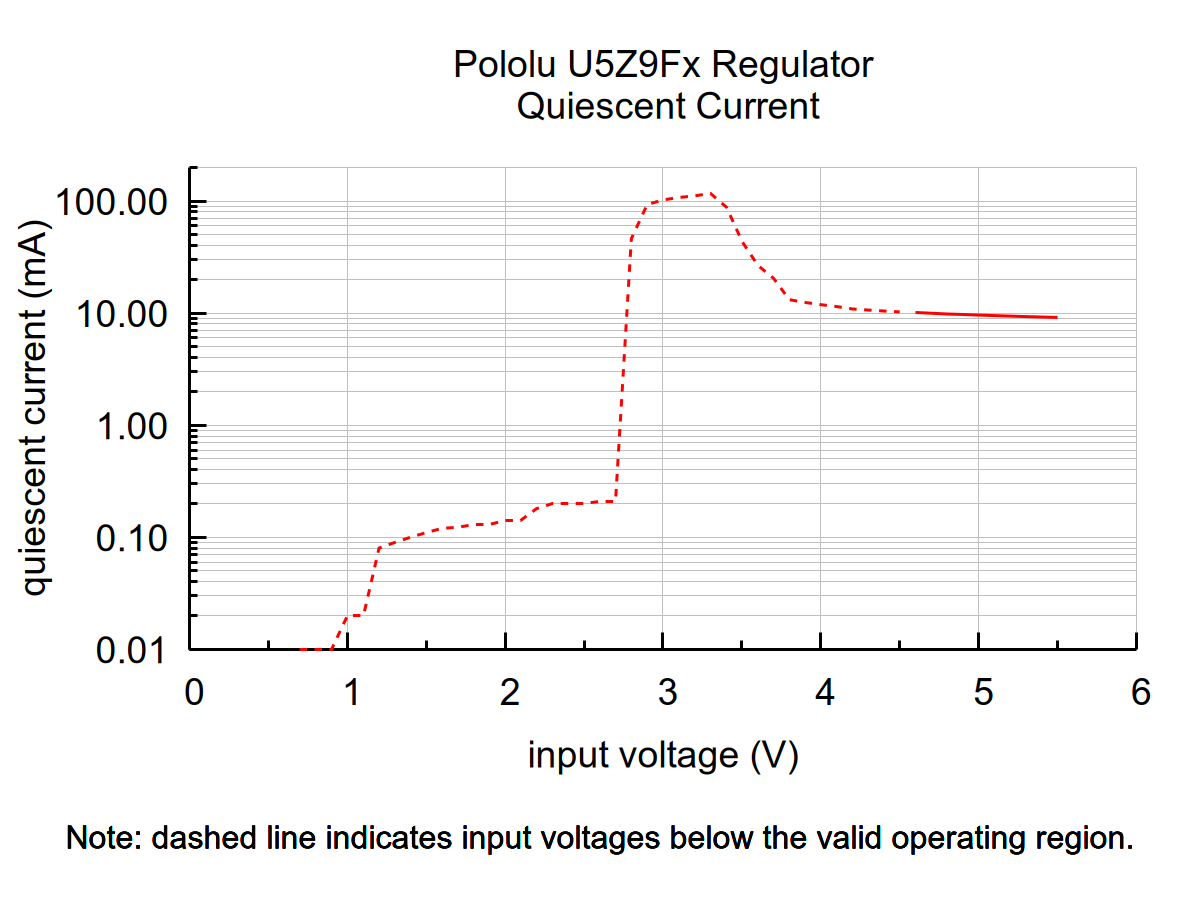
- Typical no-load quiescent current: 10 mA, though it can reach ~100 mA for input voltages below the valid operating range (see the quiescent current graph below)
- Typical efficiency: 45% (see efficiency graph below)
- Output (boost) switching frequency: ~1.6 MHz under heavy loads
- Output switching frequency decreases at low currents to improve light-load efficiency
- Over-temperature protection
- Size: 0.45″ × 1.0″ with breadboard-compatible, 0.1″-pitch through holes
The board does not have built-in protection against reverse voltage, but reverse-voltage protection modules are available for adding that functionality.
Using the module
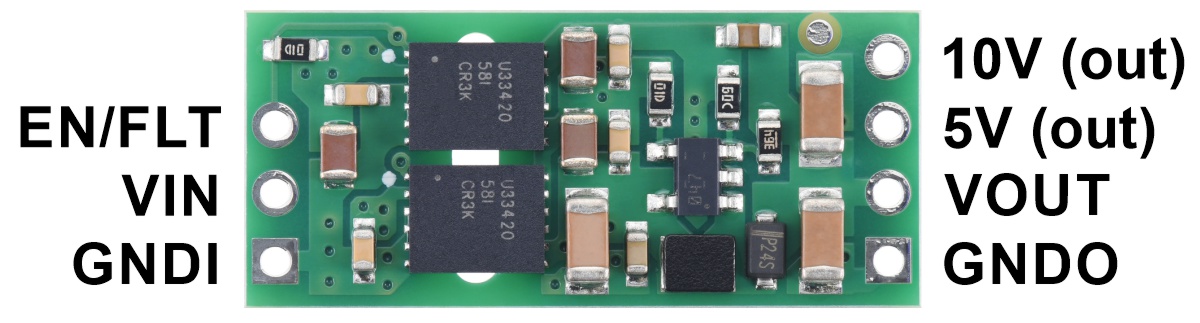 |
| Side | Pin | Description |
|---|---|---|
| Input | VIN | 5 V input power supply. The regulator operates from 4.5 V to 5.5 V. Note that the input current will need to be around 550 mA to get 50 mA out at 24 V. |
| GNDI | Ground connection for VIN. GNDI is NOT connected to GNDO. | |
| EN/FLT | UCC33420 multi-function enable input and fault output. This connects directly to the EN/FLT pins on the input sides of the UCC33420 modules and is pulled up to VIN through a 100 kΩ resistor. • Enable input: Driving this pin low disables the regulator and puts it into a low power state where it draws under 230 µA. The default state of this pin is high, which enables the regulator. • Fault output: The UCC33420 pulls this pin low for 200 µs if an output under-voltage or thermal protection fault occurs. |
|
| Output | VOUT | Regulated and isolated 24V output. |
| 5V (out) | This pin provides direct access to the isolated 5V (VCC) output of the bottom UCC33420 of the series pair, which outputs 5V relative to GNDO. | |
| 10V (out) | This pin provides direct access to the isolated 5V (VCC) output of the top UCC33420 of the series pair, which outputs 10V relative to GNDO. | |
| GNDO | Ground connection for VOUT, 5V (out), and 10V (out). GNDO is NOT connected to GNDI. |
The connections are labeled on the back side of the PCB and are arranged with a 0.1″ spacing along the edges of the board for compatibility with solderless breadboards, connectors, and other prototyping arrangements that use a 0.1″ grid. You can solder wires or 0.1″ header pins directly to the board. Note: header pins are not included with this product, but straight and right-angle male headers are available separately.
We manufacture these boards in-house at our Las Vegas facility, so we can make these regulators with customized components to better meet the needs of your project, such as by customizing the output voltage between 10.5 V and 28 V (though please note that the available current decreases significantly at higher output voltages). If you are interested in customization, please contact us.
Typical efficiency
The efficiency of a voltage regulator, defined as (Power out)/(Power in), is an important measure of its performance, especially when battery life or heat are concerns. The graph below shows the efficiencies of the VOUT (12 V) output as a function of output current:
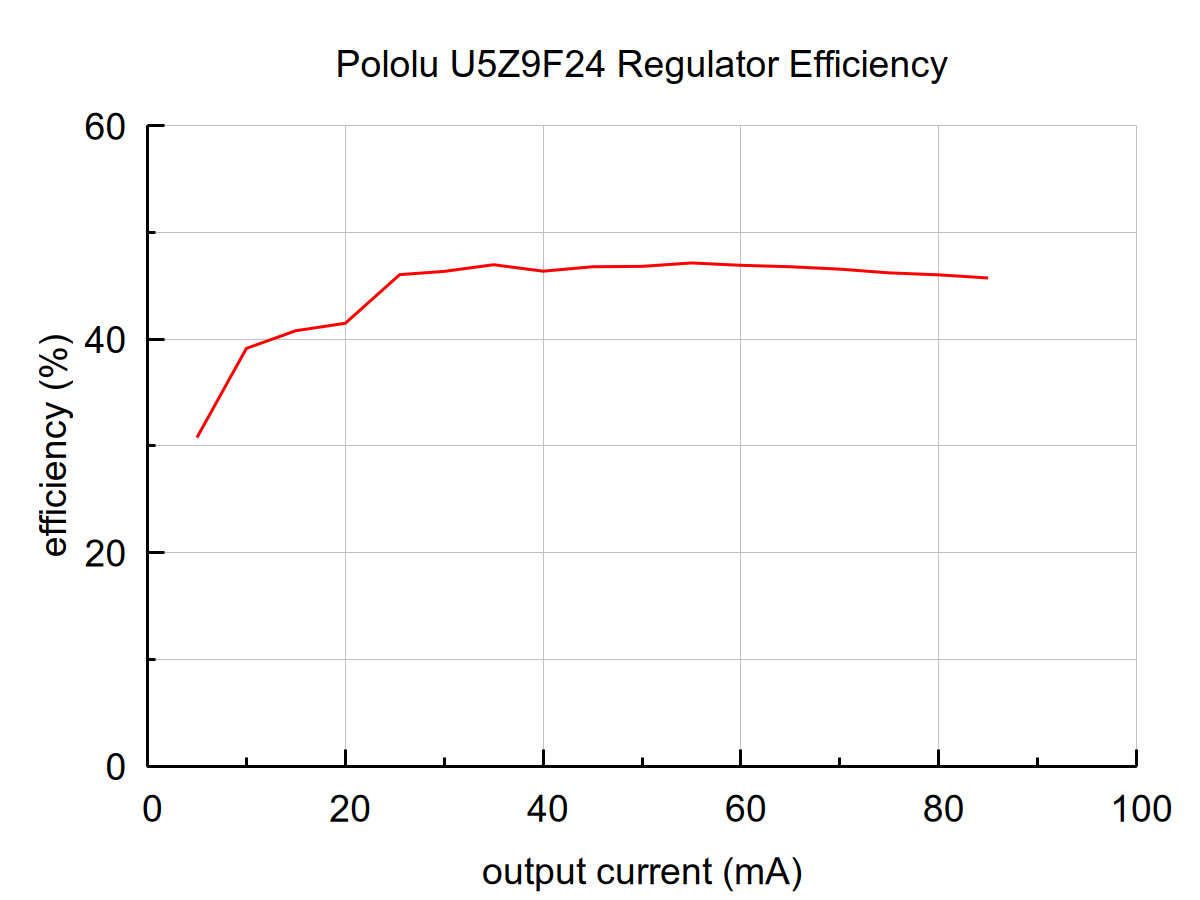 |
Please note that as this module consists of chained regulators and includes isolated power transfer, the efficiency is around 50%, which is much lower than our non-isolated switching voltage regulators. The efficiency of the 5 V and 10 V outputs is slightly higher since that does not go through the boost stage, but it is still below 60%.
Quiescent current
The quiescent current is the current the regulator uses just to power itself. The graph below shows this as a function of the input voltage, including voltages outside the valid operating range of the device:
 |
During normal operation, this product can get hot enough to burn you. Take care when handling this product or other components connected to it.
Isolation rating and board creepage considerations
The UCC33420 provides basic isolation with a manufacturer-rated working voltage of 820 VRMS. The IC package has a clearance and creepage of >4.1 mm, and our PCB has a routed slot under the IC to provide a PCB creepage distance of 4.3 mm. A rough rule of thumb is that uncontaminated FR4 PCBs should have roughly 1 mm of creepage per 100 VRMS of isolation. Please note that our regulator module is not certified to any particular safety standard.
LC voltage spikes
When connecting voltage to electronic circuits, the initial rush of current can cause voltage spikes that are much higher than the input voltage. In our tests with typical power leads (~30″ test clips), we observed spikes over 7.5 V with a 5 V input. Power supplies or leads with high inductance will make these spikes worse. An electrolytic capacitor (33 μF is a good starting point) can be added close to the regulator between VIN and GNDI to help suppress these spikes.
More information about LC spikes can be found in our application note, Understanding Destructive LC Voltage Spikes.
Related products


Related categories


Coupon Discount
U5Z9FXINTRO: Get one or more of #5767 12V, 125mA Isolated Step-Up Voltage Regulator U5Z9F12 and #5770 24V, 50mA Isolated Step-Up Voltage Regulator U5Z9F24 at $7.67. This offer is valid through 31 Jul 2026.


Home | Forum | Blog | Support | Ordering Information | Lists | Distributors | BIG Order Form | About | Contact
© 2001–2026 Pololu Corporation