Electronics » Voltage Regulators and Power Supplies » Isolated DC-DC Power Modules »
Isolated DC-DC Power Module, UCC33420, 5V/5.5V, 300mA
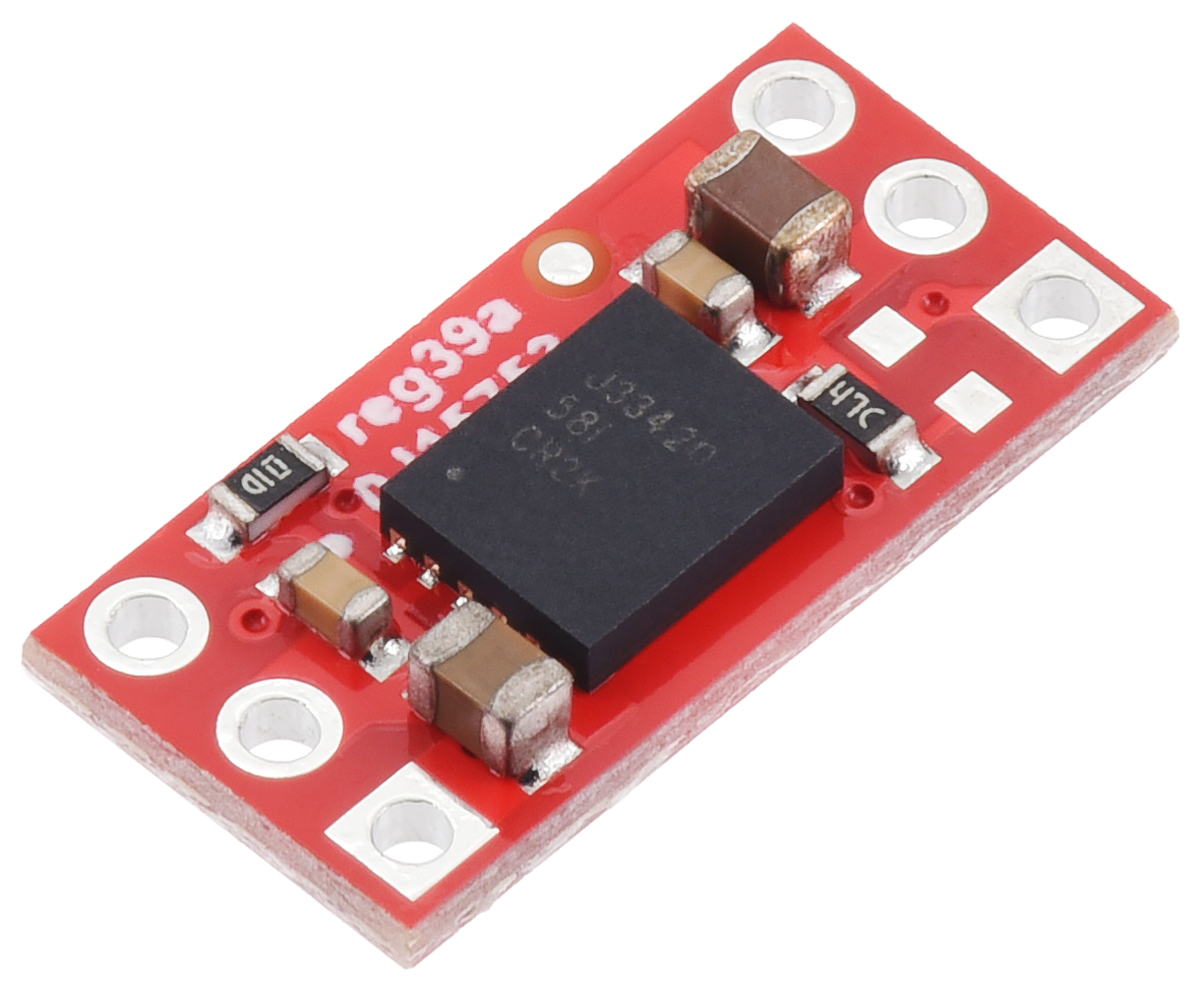
This power module is based on the TI UCC33420 and provides regulated, galvanically isolated DC-to-DC power. The output voltage is set to 5 V by default and can be changed to 5.5 V through a selection pin. Power specs:
| Input voltage | Output voltage | Max continuous output current | Size |
|---|---|---|---|
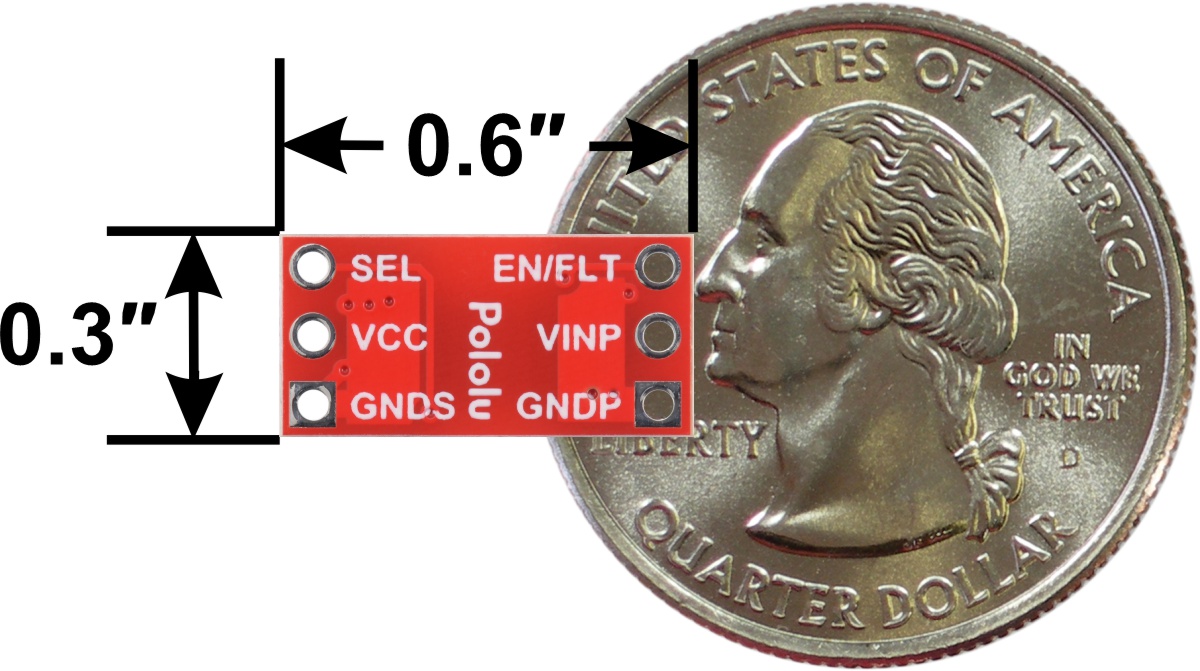
| 4.5 V to 5.5 V | 5 V (default) or 5.5 V (selectable) | 300 mA | 0.3″ × 0.6″ |
 Compare all products in Isolated DC-DC Power Modules or Step-Up/Step-Down Voltage Regulators.
| Description | Specs (12) | Pictures (6) | Resources (4) | FAQs (0) | On the blog (0) | Distributors (9) |
|---|
Overview
 |
This DC-DC power module provides galvanically isolated (electrically isolated) and regulated 5 V or 5.5 V power at up to 300 mA. Unlike non-isolated regulators, the output ground (GNDS) is effectively independent of the input side (GNDP), which can be useful for preventing ground loops and avoiding ground currents that can cause unpredictable system behavior or even lead to damage to potentially expensive components. This module is based on the Texas Instruments UCC33420RAQR, which has a 3 kVRMS isolation rating; the PCB is designed with the same 3.5 mm minimum clearance and creepage between the isolated sides as the IC, but please note that the module itself is not certified to any standard. See the UCC33420 datasheet for more information.
Here are some of the module’s key features:
- Galvanic isolation between input and output
- 4.5 V to 5.5 V input voltage range
- Selectable 5 V or 5.5 V regulated output (5 V default)
- Up to 300 mA out continuous
- Over-temperature and short-circuit protection
- Compact 0.3″ × 0.6″ size with breadboard-compatible, 0.1″-pitch through holes
Using the module
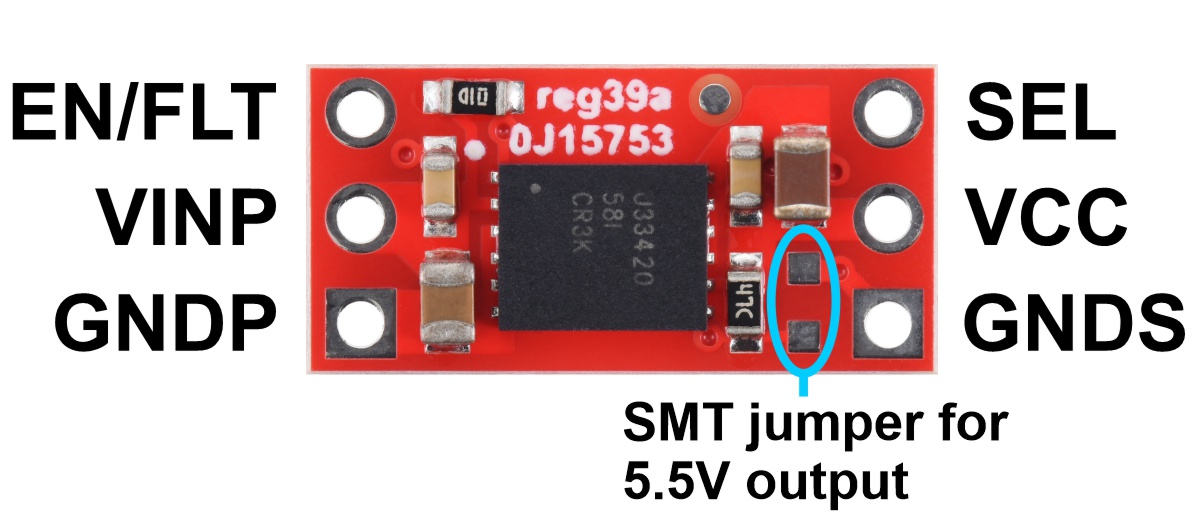 |
Input power is supplied across the primary power pins VINP and GNDP, and output power is delivered across the secondary power pins VCC and GNDS. The two sides are galvanically isolated (GNDP is NOT connected to GNDS). Note that the efficiency of this regulator is less than 60%, so the input power will need to be at least 67% higher than the output power.
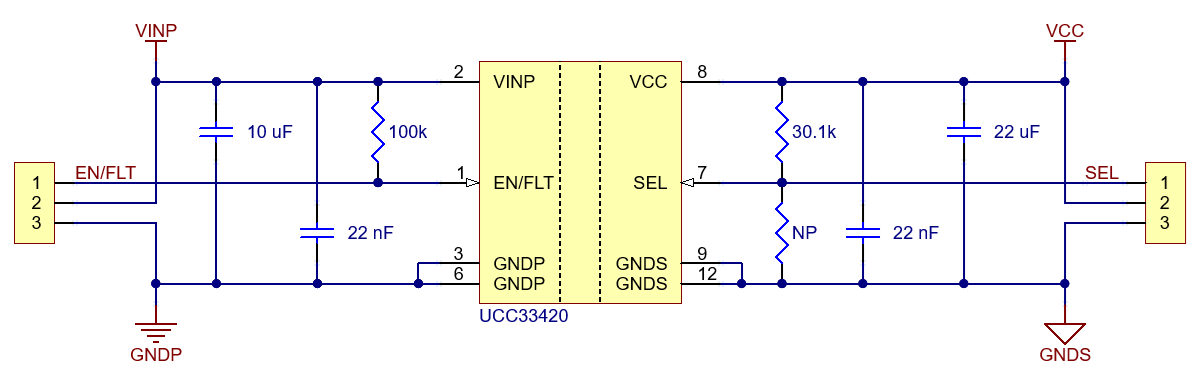
The enable input/fault output pin, EN/FLT, is pulled up to VINP through a 100 kΩ resistor, which enables the regulator by default. This pin can be driven low to disable the output and put the device into a low-power state. This pin also serves as a fault output that will drive low for 200 µs if an input over-voltage, output under-voltage, or thermal protection fault occurs.
The output voltage selection pin, SEL, is pulled up to VCC through a 30.1 kΩ resistor, which sets the output voltage to 5 V by default. To select 5.5 V for the output voltage, connect SEL to GNDS. This can be done using the board’s through holes or by adding an SMT jumper to the pads circled in the picture above. Note: The VCC voltage level is latched at power-up, so changing SEL state while the board is powered will not have any effect until the board is power-cycled or enable is toggled.
We manufacture these boards in-house at our Las Vegas facility, so we can make these regulators configured to output 5.5 V by default instead. Please contact us if you are interested in this customization.
Schematic
 |
Related products


Related categories


Home | Forum | Blog | Support | Ordering Information | Lists | Distributors | BIG Order Form | About | Contact
© 2001–2026 Pololu Corporation