Motion Control Modules » Stepper Motor Drivers » MP6603 Stepper Motor Driver Carriers »
MP6603 Stepper Motor Driver Carrier (Soldered Header Pins)
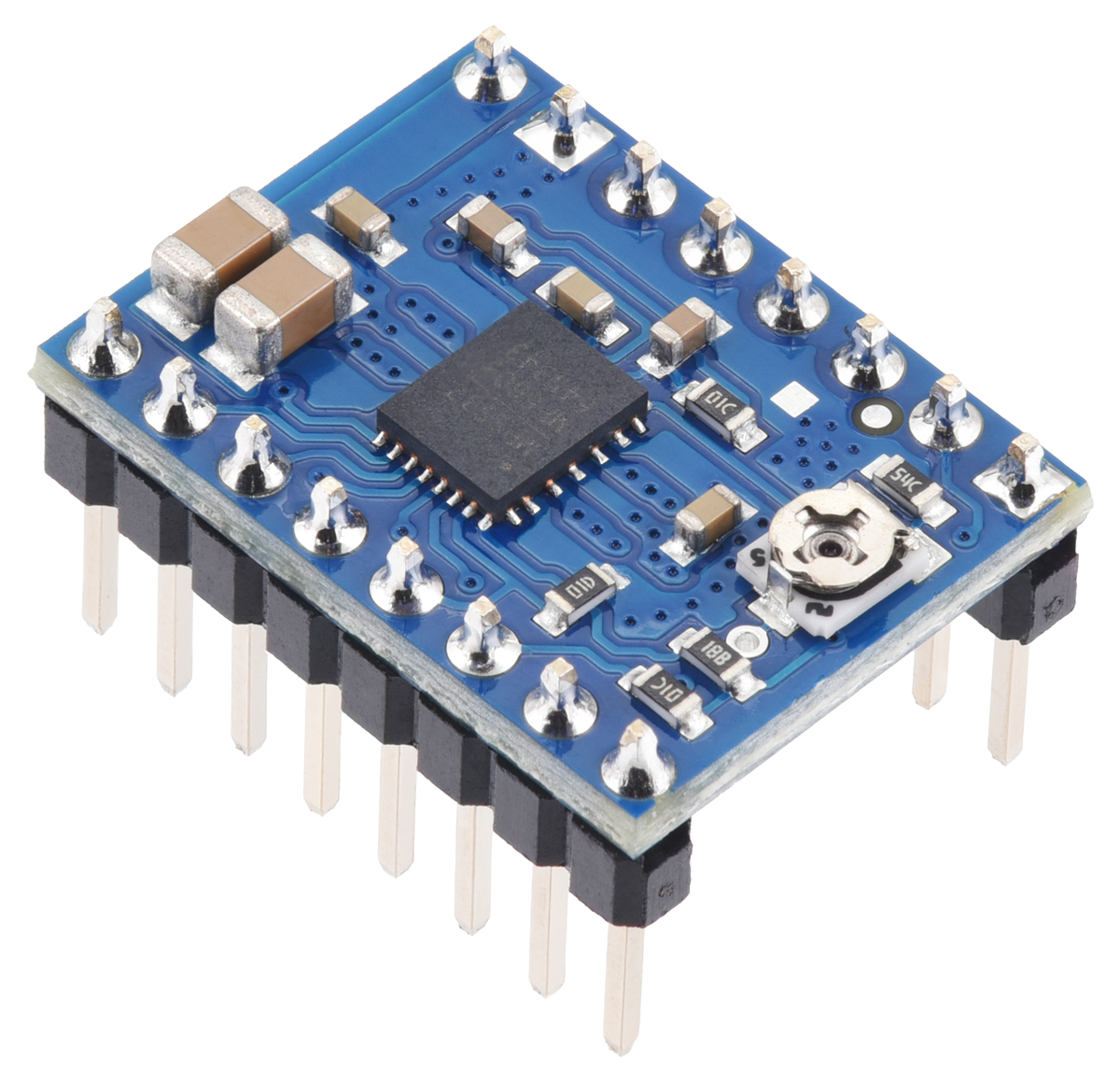
This version of our MP6603 Stepper Motor Driver Carrier ships with male header pins installed, so no soldering is required to use it with an appropriate 16-pin socket or solderless breadboard. Please see the MP6603 Stepper Motor Driver Carrier product page for more information about the driver.
Alternatives available with variations in these parameter(s): header pins soldered? Select variant…
 Compare all products in MP6603 Stepper Motor Driver Carriers or 16-pin Stepper Motor Drivers.
| Description | Specs (14) | Pictures (10) | Resources (5) | FAQs (2) | On the blog (0) | Distributors (4) |
|---|
- I want to control a 3.9 V, 600 mA bipolar stepper motor, but this driver has a minimum operating voltage above 3.9 V. Can I use this driver without damaging the stepper motor?
Yes. To avoid damaging your stepper motor, you want to avoid exceeding the rated current, which is 600 mA in this instance. All of our stepper motor drivers let you limit the maximum current, so as long as you set the limit below the rated current, you will be within spec for your motor, even if the voltage exceeds the rated voltage. The voltage rating is just the voltage at which each coil draws the rated current, so the coils of your stepper motor will draw 600 mA at 3.9 V. By using a higher voltage along with active current limiting, the current is able to ramp up faster, which lets you achieve higher step rates than you could using the rated voltage.
If you do want to use a lower motor supply voltage for other reasons, consider using our DRV8834 or STSPIN-220 low-voltage stepper motor drivers.
- How do I connect my stepper motor to a bipolar stepper motor driver?
- The answer to this question depends on the type of your stepper motor and how many wires it has. We have an application note that details possible methods for connecting stepper motors to bipolar drivers and controllers and the advantages and disadvantages of each option.
Related products


Related categories


Home | Forum | Blog | Support | Ordering Information | Lists | Distributors | BIG Order Form | About | Contact
© 2001–2026 Pololu Corporation