Electronics »
RC Interface
 Compare all products in this category
Subcategories
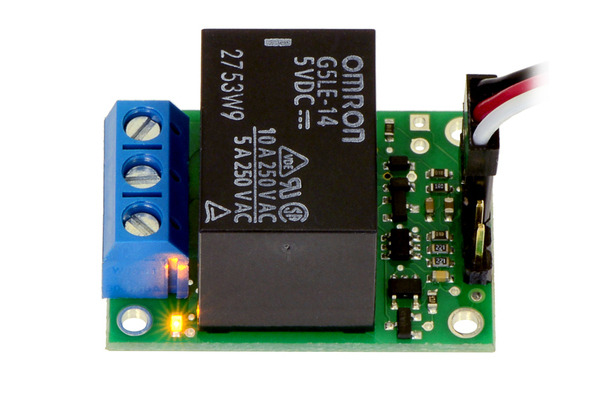
The Pololu RC switches make it easy to turn devices on and off with a standard hobby radio control (RC) system. Several versions are available, ranging from one with a simple digital output to modules with integrated MOSFETs, relays, or multiplexers.
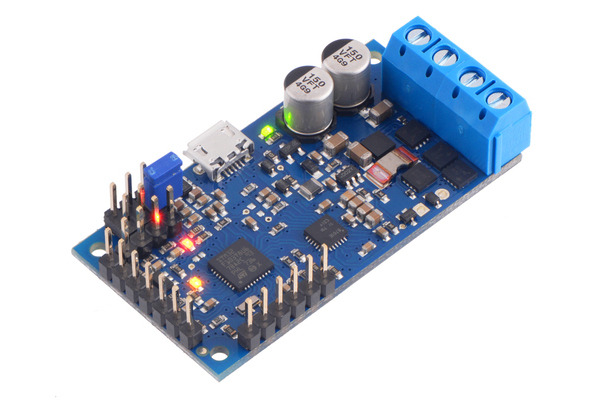
The Pololu Simple Motor Controllers (SMCs) make basic control of brushed DC motors easy. Our most versatile and configurable motor controllers yet span a wide range of power levels and offer four interface modes: USB, TTL serial, analog voltage, and hobby radio control (RC).
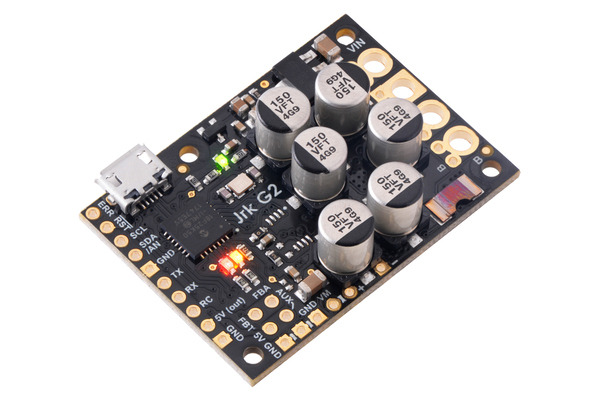
The Jrk motor controllers are highly configurable brushed DC motor controllers that can be used as an open-loop speed control or for closed-loop speed or position control. They support a variety of interface modes, including USB, TTL serial, analog voltage, and hobby radio control (RC).
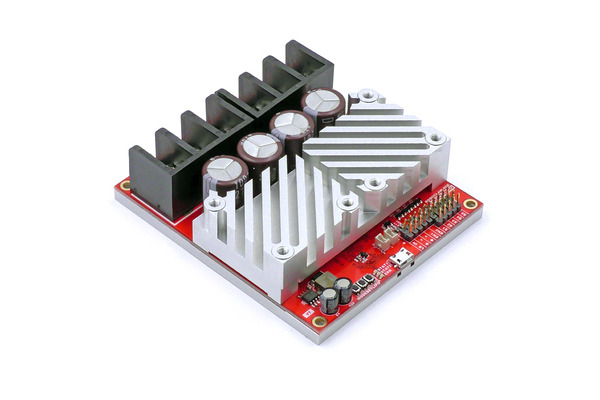
The RoboClaw motor controllers from Basicmicro (formerly Ion Motion Control) can control a one or two brushed DC motors using USB serial, TTL serial, RC, or analog inputs. Integrated dual quadrature decoders make it easy to create a closed-loop speed control system, or analog feedback can be used for position control.
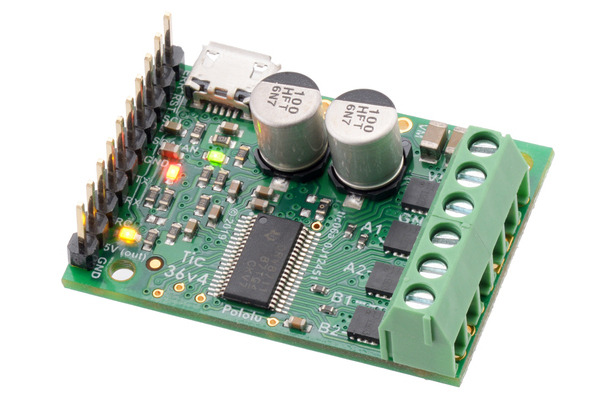
The Tic offers simple control of bipolar stepper motors directly from a variety of interfaces, including USB, TTL serial, I²C, hobby radio control (RC), analog voltage (potentiometer), and quadrature encoder signals.
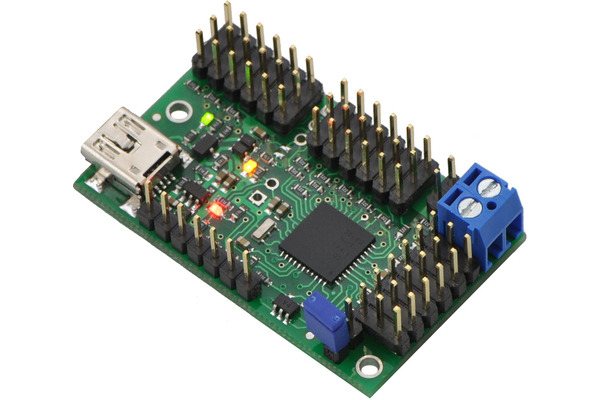
Pololu’s Maestro servo controllers offer industry-leading resolution and stability for precise, jitter-free control of your RC servos. Features include a native USB interface, separate speed and acceleration settings for each servo, internal scripting control, and channels configurable as general purpose I/O.
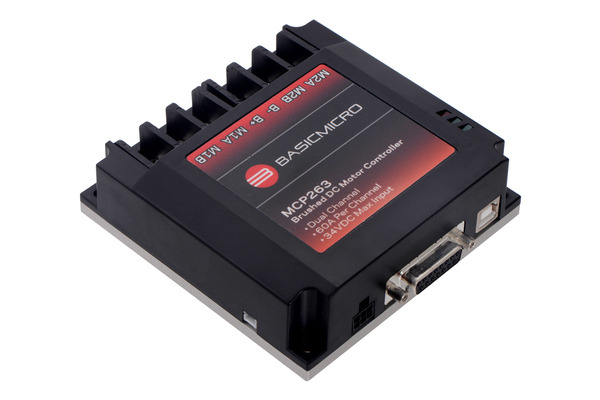
The powerful MCP motor controllers from Basicmicro (formerly Ion Motion Control) can control a pair of brushed DC motors using USB serial, TTL serial, RS-232 serial, CAN bus, RC, or analog inputs. They include integrated dual quadrature decoders and advanced features including internal scripting support and user-configurable I/O.
Related products


Related categories


Home | Forum | Blog | Support | Ordering Information | Lists | Distributors | BIG Order Form | About | Contact
© 2001–2026 Pololu Corporation