Electronics » Voltage Regulators and Power Supplies »
Step-Down (Buck) Voltage Regulators
Switching buck converters reduce an input voltage to a lower, regulated voltage much more efficiently than linear regulators. The following tables show some of the key stats for the regulators in this category, and detailed performance graphs are available on the individual product pages.
Newer and preferred products
| Output voltage options (V) | Max cont. output current |
Max input voltage |
Typical efficiency |
Reverse- voltage protection |
Galvanic isolation |
Size | Price | |||||||||||||
|---|---|---|---|---|---|---|---|---|---|---|---|---|---|---|---|---|---|---|---|---|
| Regulator | 3.3 | 5 | 5.3 | 6 | 7.5 | 8.4 | 9 | 12 | 15 | 18 | 24 | adjustable | ||||||||
 |
New! D42V110Fx family |
⬤ | ⬤ | ⬤ | ⬤ | ⬤ | ⬤ | ⬤ | ⬤ | ⬤ | ⬤ | ⬤ | 6 – 16 A | 60 V | 80% – 95% | 1.25″ × 1.7″ | $59.95 | |||
 |
New! D42V55Fx family |
⬤ | ⬤ | ⬤ | ⬤ | ⬤ | ⬤ | ⬤ | ⬤ | ⬤ | ⬤ | 3 – 8 A | 60 V | 80% – 95% | 1.0″ × 1.0″ | $31.95 | ||||
 |
D36V50Fx family |
⬤ | ⬤ | ⬤ | ⬤ | ⬤ | ⬤ | 2 – 9 A | 50 V | 80% – 95% | (1) | 1.0″ × 1.0″ | $39.95 | |||||||
 |
D30V3x line |
⬤ | ⬤ | ⬤ | ⬤ | ⬤ | ⬤ | ⬤ | 1.4 – 7 V 4.2 – 15 V D30V30MAx D30V33MAx |
1 – 4.5 A | 45 V | 80% – 95% | (1) | 0.7″ × 0.8″ 0.6″ × 1.0″ 0.9″ × 1.2″ |
$29.95 to $39.95 |
|||||
 |
D36V28Fx family |
⬤ | ⬤ | ⬤ | ⬤ | ⬤ | ⬤ | 2 – 4 A | 50 V | 80% – 95% | (1) | 0.7″ × 0.8″ | $23.95 to $24.95 |
|||||||
 |
D24V22Fx family |
⬤ | ⬤ | ⬤ | ⬤ | ⬤ | ⬤ | 2.2 – 2.6 A | 36 V | 85% – 95% | 0.7″ × 0.7″ | $18.95 to $19.95 |
||||||||
 |
New! APM81815 carriers |
⬤ | ⬤ | ⬤ | ⬤ | 0.5 – 1.5 A | 72 V | 50% – 95% | 0.4″ × 0.75″ | $6.95 | ||||||||||
 |
New! D45V5Fx family |
⬤ | ⬤ | ⬤ | ⬤ | ⬤ | 0.5 A | 65 V | 70% – 95% | 0.3″ × 0.45″ | $4.49 to $4.75 |
|||||||||
 |
D36V6x family |
⬤ | ⬤ | ⬤ | ⬤ | ⬤ | ⬤ | ⬤ | 2.5 – 7.5 V 4 – 25 V |
0.6 A | 50 V | 60% – 90% | 0.4″ × 0.5″ 0.4″ × 0.6″ |
$5.95 to $7.95 |
||||||
 |
New! D24V7Fx family |
⬤ | ⬤ | ⬤ | ⬤ | ⬤ | ⬤ | 0.6 A | 36 V | 75% – 95% | 0.34″ × 0.54″ | $2.75 | ||||||||
 |
D45V1E1Fx D45V1E2Fx |
⬤ ⬤ |
⬤ ⬤ |
⬤ ⬤ |
0.1 A | 65 V | 75% – 90% | 0.3″ × 0.5″ 0.5″ × 0.6″ |
$5.75 | |||||||||||
 |
New! D24Z3F5 |
⬤(2) | 0.3 A | 36 V | 45% – 55% | 0.4″ × 1.0″ | $7.49 | |||||||||||||
Note 1: Reverse voltage protection to -40 V. Connecting supplies over 40 V in reverse can damage the device.
Note 2: Output can be 5 V (default) or 5.5 V (selectable), depending on the state of a selection input.
We manufacture these boards in-house at our Las Vegas facility, so we can make these regulators with customized components to better meet the needs of your project, such as by customizing the output voltage. If you are interested in customization, please contact us for a quote.
Older or supply-chain-constrained products
| Regulator | Output voltage (V) | Max output current | Max input voltage | Typical efficiency | Size | Price |
|---|---|---|---|---|---|---|
| D24V150Fx family | 3.3, 5, 6, 7.5, 9, 12 | 15 A | 40 V | 80% – 95% | 1.25″ × 1.7″ | $79.95 |
| #2866: D24V90F5 | 5 | 9 A | 38 V | 80% – 95% | 0.8″ × 1.6″ | $36.82 |
| #2851: D24V50F5 | 5 | 5 A | 38 V | 85% – 95% | 0.7″ × 0.8″ | $32.95 |
| D24V10Fx family | 3.3, 5, 6, 9, 12 | 1 A | 36 V | 80% – 95% | 0.5″ × 0.7″ | $12.95 |
| D24V5Fx family | 1.8, 2.5, 3.3, 5, 6, 9, 12, 15 | 0.5 A | 36 V | 75% – 95% | 0.4″ × 0.5″ | $8.95 |
Mature products (generally not recommended for new designs)
| Regulator | Output voltage (V) | Max output current | Max input voltage | Typical efficiency | Size | Price |
|---|---|---|---|---|---|---|
| D24V25Fx family | 3.3, 5, 6, 7.5, 9 | 2.5 A | 38 V | 80% – 95% | 0.7″ × 0.7″ | $25.95 |
| D24V6Fx family | 3.3, 5, 9, 12 | 0.6 A | 42 V | 80% – 95% | 0.4″ × 0.5″ | $10.95 |
| D24V3Fx family | 3.3, 5, 9, 12 | 0.3 A | 42 V | 80% – 95% | 0.4″ × 0.5″ | $8.95 |
 Compare all products in this category
Subcategories
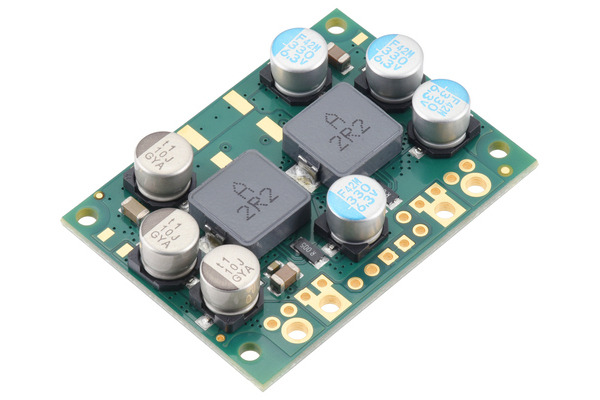
These high-power synchronous buck voltage regulators take input voltages up to 60 V and efficiently reduce them to a lower fixed output voltage while allowing for typical continuous output currents between 6 A and 16 A, depending on the combination of input and output voltage. Available in output voltages from 3.3 V to 24 V.
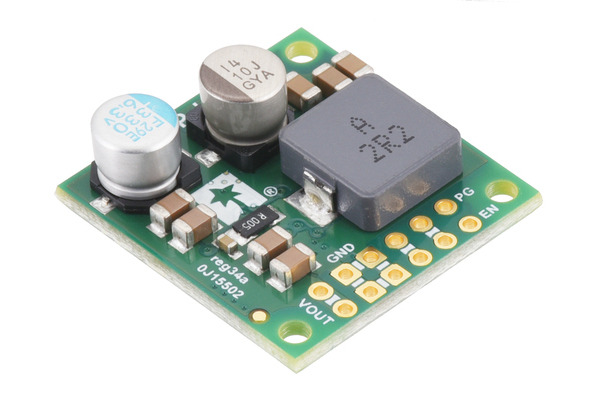
These powerful synchronous buck voltage regulators take input voltages up to 60 V and efficiently reduce them to a lower fixed output voltage while allowing for typical continuous output currents between 3 A and 8 A, depending on the combination of input and output voltage. Available in output voltages from 3.3 V to 24 V.
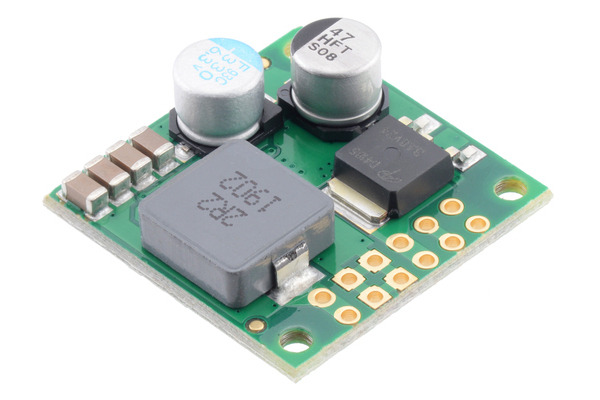
These powerful synchronous buck voltage regulators take input voltages up to 50 V and efficiently reduce them to a lower fixed output voltage while allowing for typical continuous output currents between 2 A and 9 A, depending on the combination of input and output voltage.
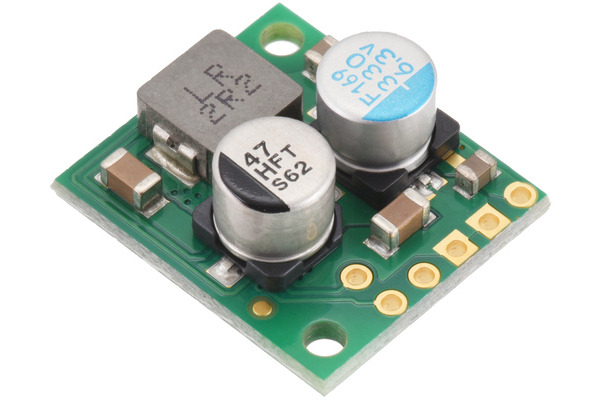
This line of synchronous buck voltage regulators works up to 45 V in and efficiently outputs lower output voltages with typical max continuous output currents between 1 A and 4.5 A. Fixed and adjustable options available, including versions with adjustable low-voltage cutoff thresholds.
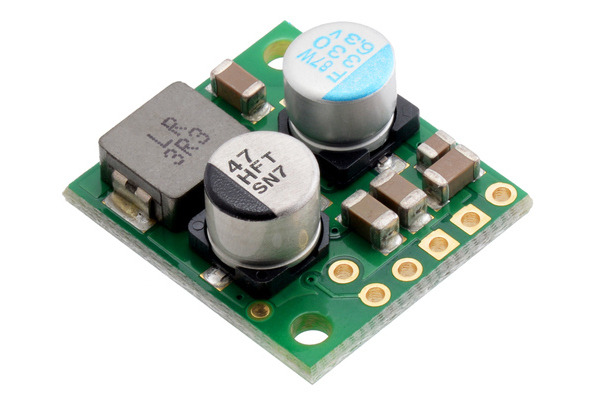
These compact synchronous buck voltage regulators take input voltages up to 50 V and efficiently reduce them to a lower fixed output voltage while allowing for typical continuous output currents between 2 A and 4 A, depending on the combination of input and output voltage.
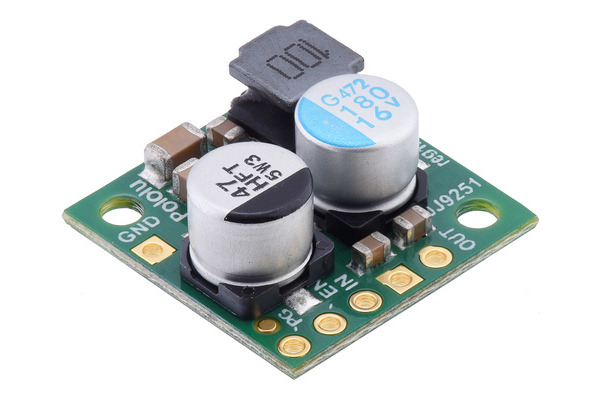
These compact synchronous, switching step-down voltage regulators generate lower output voltages from input voltages as high as 36 V. They offer typical efficiencies of 85% to 95% and continuous output currents over 2 A.
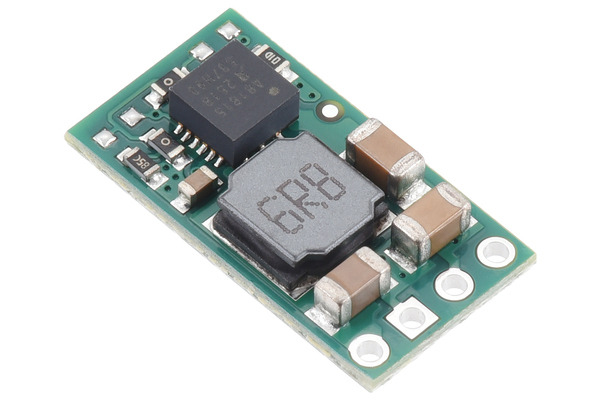
These carrier boards for Allegro’s APM81815 synchronous step-down voltage regulator take input voltages up to 72 V (80 V absolute max) and efficiently reduce them to a lower fixed output voltage while allowing for typical continuous output currents between 0.5 A and 1.5 A, depending on the combination of input and output voltage.
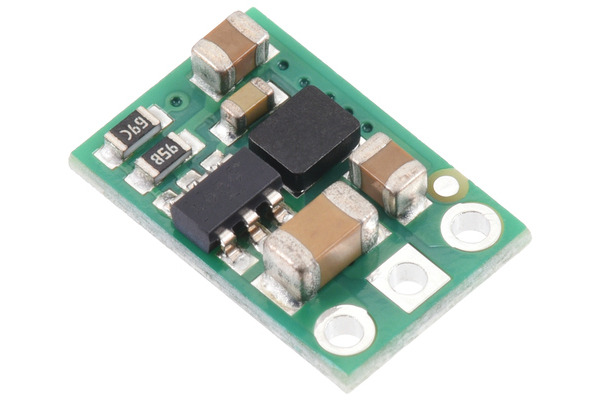
These small synchronous buck voltage regulators efficiently generate lower output voltages from input voltages as high as 65 V with maximum continuous output currents between 400 mA and 700 mA, depending on the combination of input and output voltage.
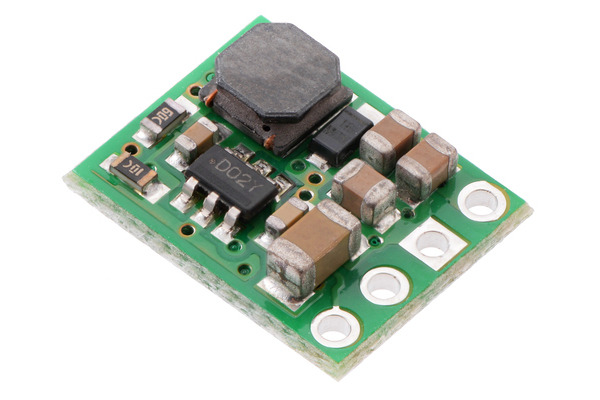
This family of small switching step-down voltage regulators efficiently generates lower output voltages from input voltages as high as 50 V with a maximum current of 600 mA. They have low dropout voltages. Various fixed-voltage and adjustable-output versions are available.
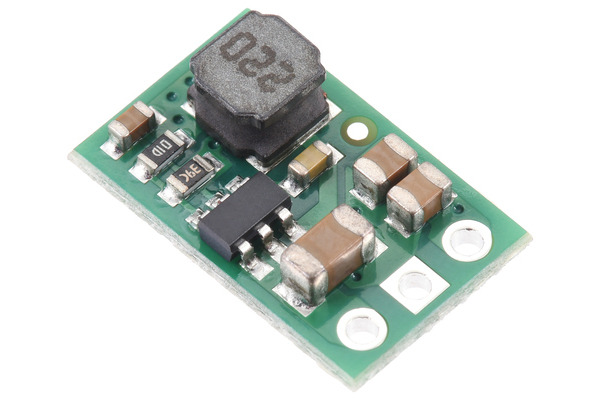
These small synchronous buck voltage regulators efficiently generate lower output voltages from input voltages as high as 36 V with maximum continuous output currents of 600 mA.
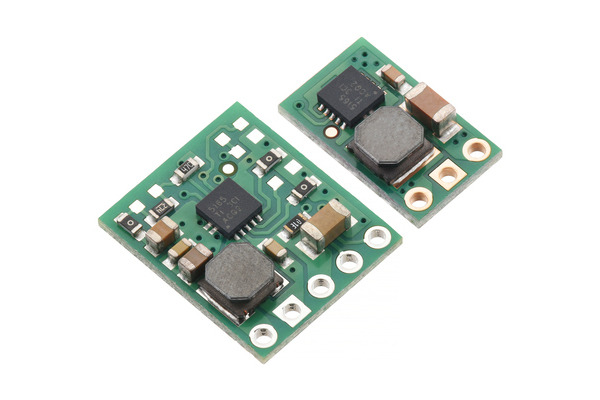
This line of small synchronous step-down voltage regulators generates lower output voltages from input voltages as high as 65 V with a maximum current of 100 mA. They have extremely low quiescent currents and high efficiencies at light loads.
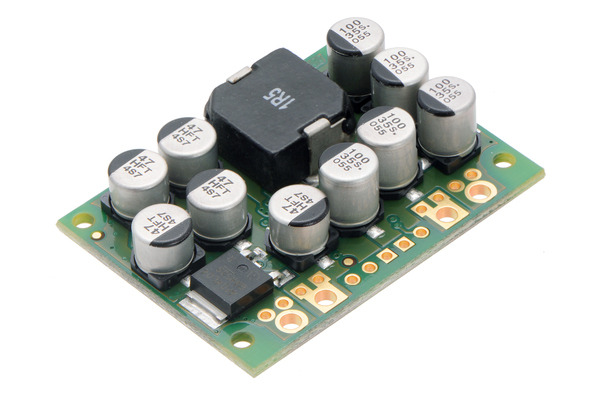
These powerful synchronous buck voltage regulators take input voltages up to 40 V and efficiently reduce them to a lower fixed output voltage while allowing for an available output current of around 15 A.
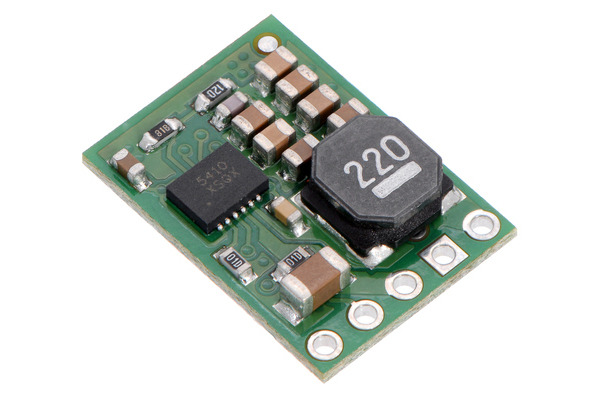
These compact synchronous buck voltage regulators take input voltages up to 36 V and reduce them to a lower fixed output voltage while allowing for a maximum output current of 1 A. They offer very high efficiency and very low dropout voltages.
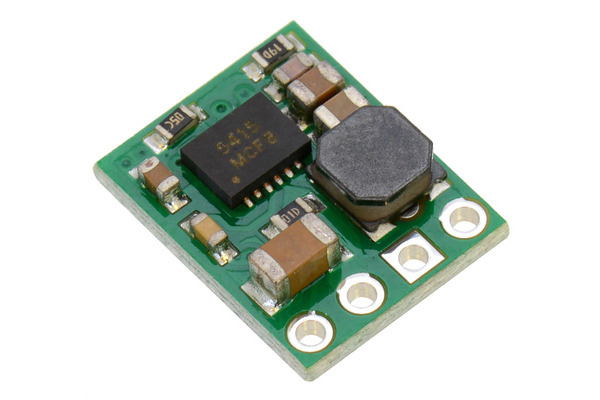
These compact synchronous buck voltage regulators take input voltages up to 36 V and reduce them to a lower fixed output voltage while allowing for a maximum output current of 500 mA. They offer very high efficiency and very low dropout voltages.
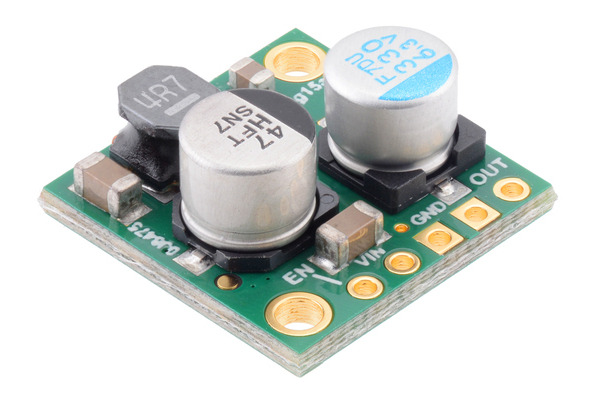
These compact synchronous, switching step-down voltage regulators generate lower output voltages from input voltages as high as 38 V. They offer typical efficiencies of 80% to 95% and continuous output currents up to 2.5 A.
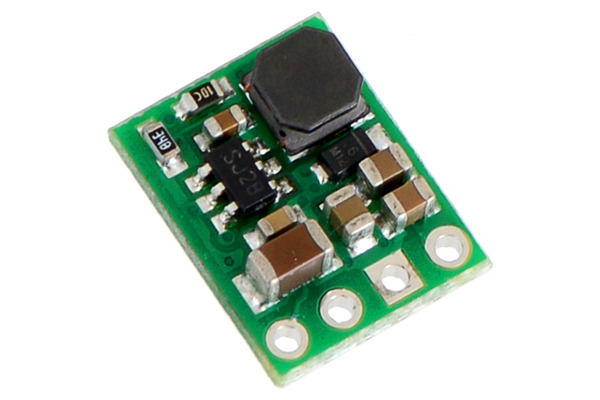
This family of small switching step-down voltage regulators efficiently generates lower output voltages from input voltages as high as 42 V with a maximum current of 600 mA.
This family of small switching step-down voltage regulators efficiently generates lower output voltages from input voltages as high as 42 V with a maximum current of 300 mA.
Products in category “Step-Down (Buck) Voltage Regulators”
| Pololu item #: 5756 | |
| Brand: Pololu | supply outlook |
| Status: Active and Preferred | |

|
|


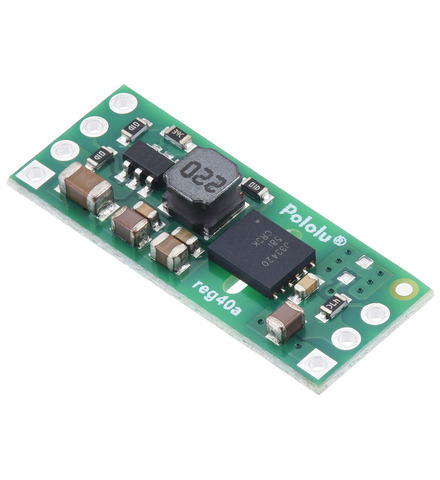
This step-down voltage regulator consists of an input step-down (buck) regulator in front of an isolated DC-to-DC power module. This enables up to 300 mA at 5 V (default) or 5.5 V (selectable) out from a wide 5.5 V to 36 V input.
| Input voltage | Output voltages | Max continuous output current | Size |
|---|---|---|---|
| 5.5 V to 36 V | 5 V (default) or 5.5 V (selectable) | 300 mA | 0.4″ × 1.0″ |
| Pololu item #: 2851 | |
| Brand: Pololu | supply outlook |
| Status: Rationed (Active) | |
|
|
|
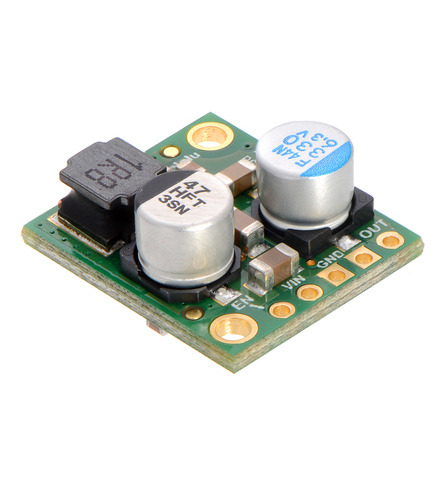
This small synchronous switching step-down (or buck) regulator takes an input voltage of up to 38 V and efficiently reduces it to 5 V. The board measures only 0.7″ × 0.8″, but it allows a typical continuous output current of up to 5 A. Typical efficiencies of 85% to 95% make this regulator well suited for high-power applications like powering motors or servos. High efficiencies are maintained at light loads by dynamically changing the switching frequency, and an optional shutdown pin enables a low-power state with a current draw of a few hundred microamps.
| Pololu item #: 2866 | |
| Brand: Pololu | supply outlook |
| Status: Rationed (Active) | |
|
|
|
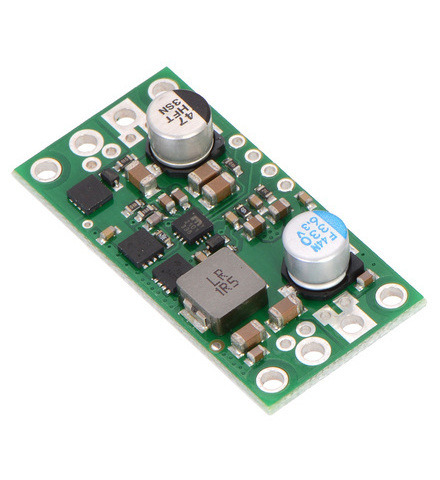
This synchronous switching step-down (or buck) regulator takes an input voltage of up to 38 V and efficiently reduces it to 5 V with an available output current of around 9 A. Typical efficiencies of 80% to 95% make this regulator well suited for higher-power applications like powering motors or servos, while high efficiencies are maintained at light loads by dynamically changing the switching frequency, and an optional shutdown pin enables a low-power state with a current draw of a few hundred microamps. The regulator’s output voltage setting can also be lowered by adding an external resistor.
Related products


Related categories


Home | Forum | Blog | Support | Ordering Information | Lists | Distributors | BIG Order Form | About | Contact
© 2001–2026 Pololu Corporation