Compare all products in this category
|
|
The Pololu Wixel is a general-purpose programmable module featuring a 2.4 GHz radio and USB. You can write your own software or load precompiled, open-source apps onto it, turning it into a wireless serial link, data logger, or whatever you need for your current project.
|
|
|
|
|
The Pololu Wixel is a general-purpose programmable module featuring a 2.4 GHz radio and USB. You can write your own software or load precompiled, open-source apps onto the TI CC2511F32 microcontroller at the heart of the Wixel, turning it into a wireless serial link, data logger, or whatever you need for your current project. With 29 KB of available flash and 4 KB of RAM, the Wixel is even suitable as the main controller for a robot or other system. This version ships with 0.1" male header pins installed as shown.
|
|
|
|
|
|
|
The Pololu Wixel is a general-purpose programmable module featuring a 2.4 GHz radio and USB. You can write your own software or load precompiled, open-source apps onto the TI CC2511F32 microcontroller at the heart of the Wixel, turning it into a wireless serial link, data logger, or whatever you need for your current project. With 29 KB of available flash and 4 KB of RAM, the Wixel is even suitable as the main controller for a robot or other system. This version ships 0.1" male header pins included but not soldered in, allowing for custom installations.
|
|
|
|
|
|
|
Unleash your Arduino! This shield allows you to interface Wixel wireless modules to your Arduino (and other compatible products), enabling simple wireless programming, debugging, and control using standard Arduino software. Wixel developers can also use this item as a Wixel prototyping board.
|
|
|
|
|
|
|
This simple DIP breakout board from SparkFun for the Roving Networks RN-41 Bluetooth module lets you add a Bluetooth interface to a device that has a 3.3V serial port. Two 0.1" headers spaced 0.8" apart makes it easy to use with standard solderless breadboards and 0.1" perfboards. All pertinent pins are broken out and labeled.
|
|
|
|
|
|
|
The BlueSMiRF is an easy-to-use Bluetooth serial link that works over a range of logic voltages from 3.3 to 6 V. It has a transmission distance of up to 18 meters. The board carries the RN-42 Class 2 Bluetooth module from Roving Networks, which is a robust, FCC-approved Bluetooth module. A single 0.1″ header for all the pins makes it easy to use with standard solderless breadboards and 0.1″ perfboards.
|
|
|
|
|
|
|
This is a breakout board from SparkFun for the Silicon Laboratories Si4703 FM tuner chip. Beyond being a simple FM radio, the Si4703 is also capable of detecting and processing both Radio Data Service (RDS) and Radio Broadcast Data Service (RBDS) information. The Si4703 even does the job of filtering and carrier detection and captures data such as the station ID and song name.
|
|
|
|
|
|
|
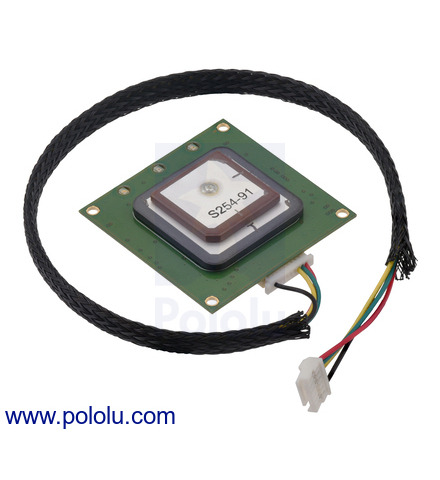
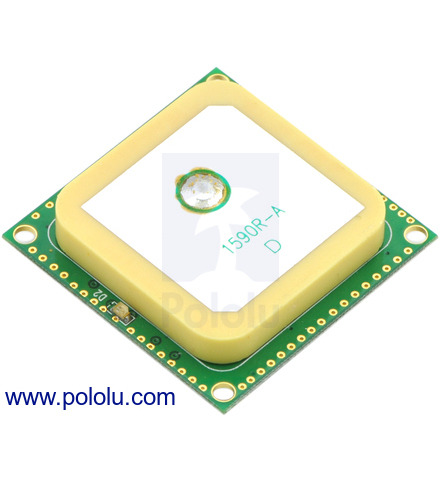
The Locosys LS20031 GPS receiver integrates a MediaTek MT3329 66-channel GPS chip with a ceramic antenna to create a complete GPS module that can track up to 66 GPS satellites at a time. The GPS module supports up to a 10Hz update rate, a built-in rechargeable battery for rapid satellite acquisition (external power is still required for normal operation), and more than 6 different NMEA ASCII sentences that are output to a TTL-level serial port.
|
|
|
|
|
|
|
The Narobo DroneCell makes it easy to build wireless projects based on cellular telephone technology. When equipped with an active SIM card (not included), the DroneCell becomes a GSM/GPRS quad-band cell phone with a TTL serial interface, enabling remote control of your project anywhere there is cell phone reception (e.g. control your robot in Los Angeles from your laptop in New York City). It can communicate via text messages (short message service), via phone calls, and over the Internet. The header pins have 0.1" spacing, making this cellular module compatible with standard solderless breadboards and 0.1" perfboards.
|
|
|
|
|