Electronics » Sensors »
Accelerometers, Gyros, & Compasses
 Compare all products in this category
Products in category “Accelerometers, Gyros, & Compasses”
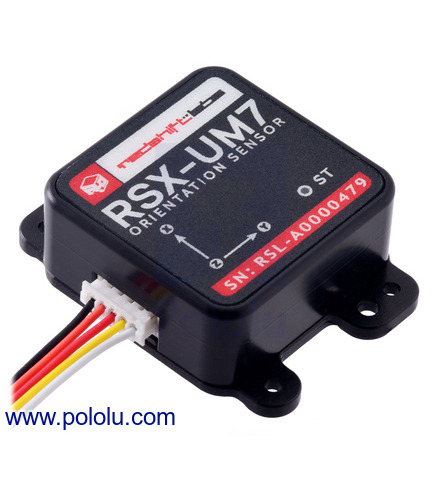
| Pololu item #: 2764 | |
| Brand: Redshift Labs | |

|
|
The UM7 orientation sensor from Redshift Labs is an Attitude and Heading Reference System (AHRS) that contains a three-axis accelerometer, rate gyro, and magnetometer. It combines this data using an Extended Kalman Filter to produce attitude and heading estimates.
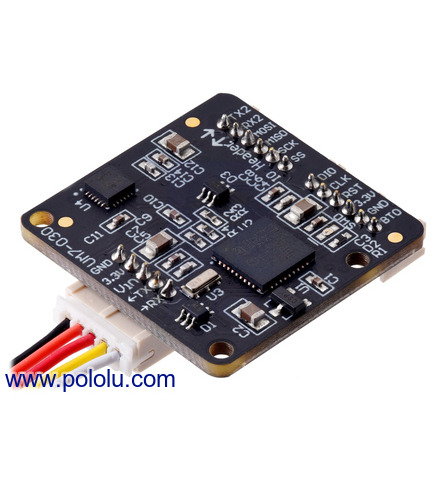
| Pololu item #: 2763 | |
| Brand: Redshift Labs | |
|
|
|
The UM7-LT orientation sensor from Redshift Labs is an Attitude and Heading Reference System (AHRS) that contains a three-axis accelerometer, rate gyro, and magnetometer. It combines this data using an Extended Kalman Filter to produce attitude and heading estimates. This LT version of the UM7 does not have an enclosure.
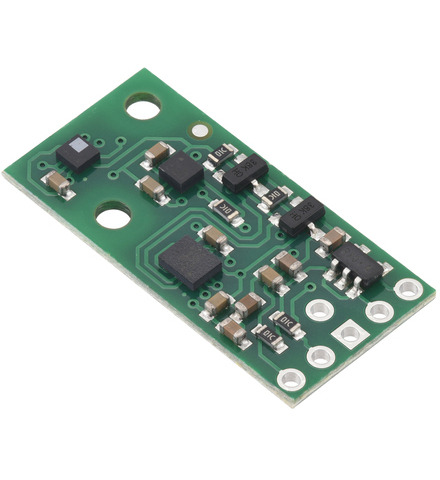
| Pololu item #: 2863 | |
| Brand: Pololu | supply outlook |
| Status: Active and Preferred | |
|
|
|


The AltIMU-10 v6 is an inertial measurement unit (IMU) and altimeter that features the same LSM6DSO gyro and accelerometer and LIS3MDL magnetometer as the MinIMU-9 v6, and adds an LPS22DF digital barometer. An I²C interface accesses ten independent pressure, rotation, acceleration, and magnetic measurements that can be used to calculate the sensor’s altitude and absolute orientation. The board operates from 2.5 to 5.5 V and has a 0.1″ pin spacing.
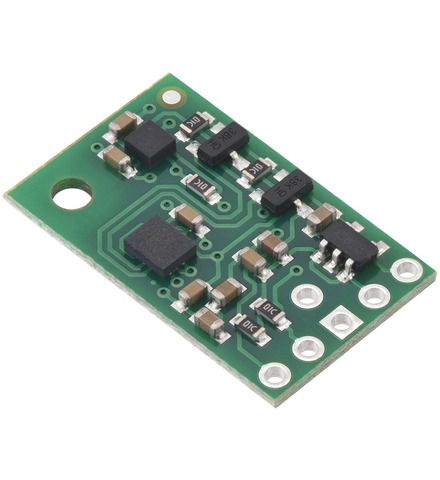
| Pololu item #: 2862 | |
| Brand: Pololu | supply outlook |
| Status: Active and Preferred | |
|
|
|
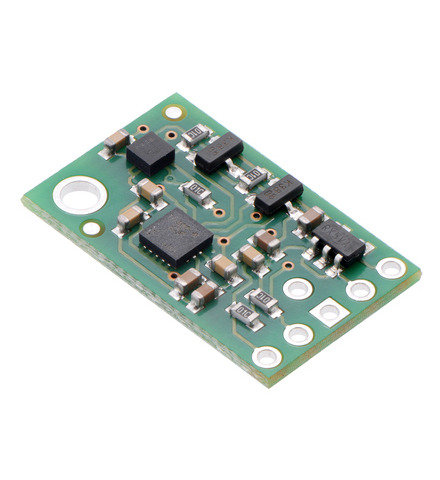
The MinIMU-9 v6 is an inertial measurement unit (IMU) that packs an LSM6DSO 3-axis gyro and 3-axis accelerometer and an LIS3MDL 3-axis magnetometer onto a tiny 0.8″ × 0.5″ board. An I²C interface accesses nine independent rotation, acceleration, and magnetic measurements that can be used to calculate the sensor’s absolute orientation. The MinIMU-9 v6 board includes a voltage regulator and a level-shifting circuit that allow operation from 2.5 to 5.5 V, and the 0.1″ pin spacing makes it easy to use with standard solderless breadboards and 0.1″ perfboards.
| Pololu item #: 2738 | |
| Brand: Pololu | supply outlook |
| Status: Rationed (Active) | |
|
|
|
The Pololu MinIMU-9 v5 is an inertial measurement unit (IMU) that packs an LSM6DS33 3-axis gyro and 3-axis accelerometer and an LIS3MDL 3-axis magnetometer onto a tiny 0.8″ × 0.5″ board. An I²C interface accesses nine independent rotation, acceleration, and magnetic measurements that can be used to calculate the sensor’s absolute orientation. The MinIMU-9 v5 board includes a voltage regulator and a level-shifting circuit that allow operation from 2.5 to 5.5 V, and the 0.1″ pin spacing makes it easy to use with standard solderless breadboards and 0.1″ perfboards.
| Pololu item #: 2737 | |
| Brand: Pololu | |
| Status: Active and Preferred | |
|
|
|
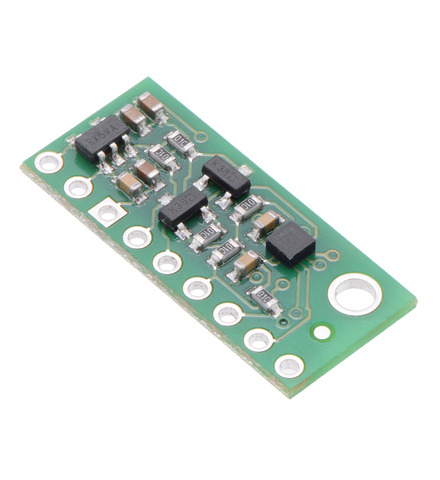
This module is a carrier/breakout board for the ST LIS3MDL three-axis magnetometer. The sensor provides magnetic field strength measurements with a configurable range of ±4 gauss to ±16 gauss that can be read through a digital I²C or SPI interface. The board includes a 3.3 V voltage regulator and integrated level shifters that allow operation from 2.5 to 5.5 V, and the 0.1″ pin spacing makes it easy to use with standard solderless breadboards and 0.1″ perfboards.
| Pololu item #: 2798 | |
| Brand: Pololu | supply outlook |
| Status: Active and Preferred | |
|
|
|
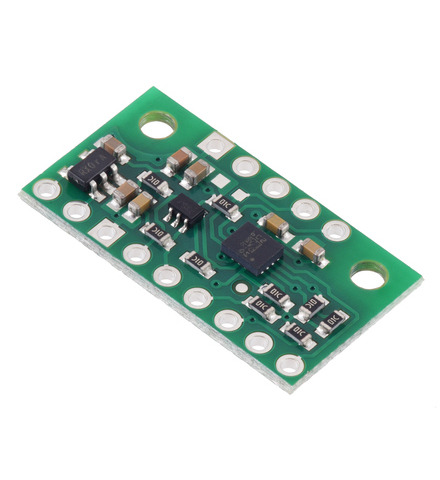
The LSM6DSO combines a digital 3-axis accelerometer and 3-axis gyroscope into a single package. The sensor provides six independent acceleration and rotation rate readings whose sensitivities can be set in the ranges of ±2 g to ±16 g and ±125°/s to ±2000°/s, available through I²C/I3C and SPI interfaces. This LSM6DSO carrier board includes a 3.3 V voltage regulator and integrated level shifters that allow operation from 1.8 V to 5.5 V, and the 0.1″ pin spacing makes it easy to use with standard solderless breadboards and 0.1″ perfboards.
| Pololu item #: 2736 | |
| Brand: Pololu | supply outlook |
| Status: Rationed (Active) | |
|
|
|
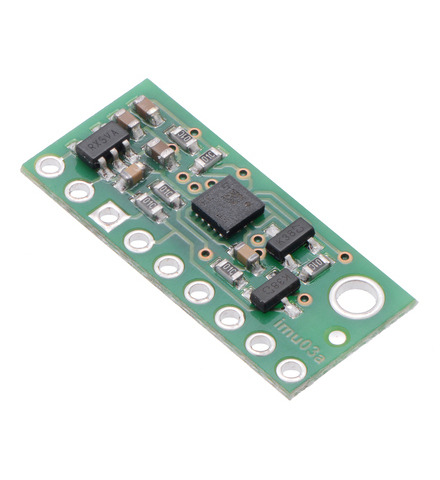
The LSM6DS33 combines a digital 3-axis accelerometer and 3-axis gyroscope into a single package. The sensor provides six independent acceleration and rotation rate readings whose sensitivities can be set in the ranges of ±2 g to ±16 g and ±125°/s to ±2000°/s, available through I²C and SPI interfaces. This LSM6DS33 carrier board includes a 3.3 V voltage regulator and integrated level shifters that allow operation from 2.5 to 5.5 V, and the 0.1″ pin spacing makes it easy to use with standard solderless breadboards and 0.1″ perfboards.
| Pololu item #: 2129 | |
| Brand: Pololu | |
| Status: End-of-Life Rationing | |
|
|
|
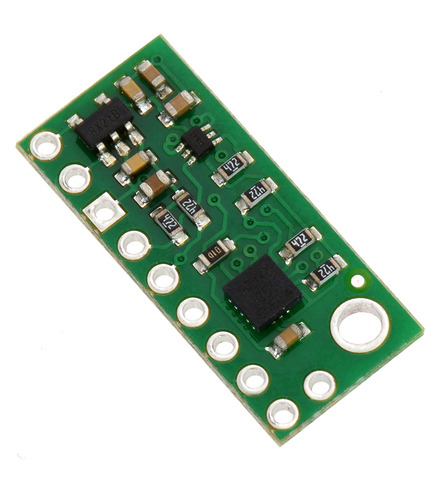
This sensor is a carrier/breakout board for the ST L3GD20H three-axis gyroscope, which measures the angular rates of rotation about the roll (X), pitch (Y), and yaw (Z) axes. Angular velocity measurements with a configurable range of ±245°/s, ±500°/s, or ±2000°/s can be read through a digital I²C or SPI interface. The board has a 3.3 V linear regulator and integrated level-shifters that allow it to work over an input voltage range of 2.5 V to 5.5 V, and the 0.1″ pin spacing makes it easy to use with standard solderless breadboards and 0.1″ perfboards.
| Pololu item #: 2125 | |
| Brand: Pololu | |
| Status: Clearance | |
|
|
|
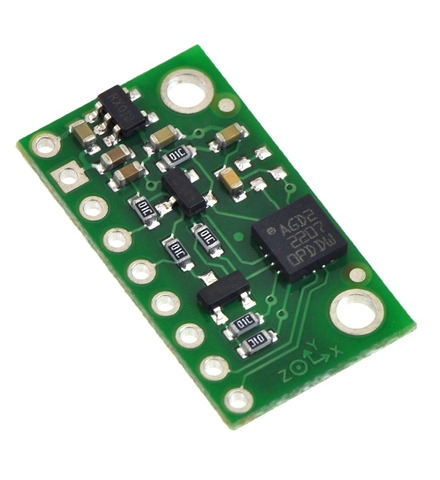
This sensor is a carrier/breakout board for the ST L3GD20 three-axis gyroscope, which measures the angular rates of rotation about the roll (X), pitch (Y), and yaw (Z) axes. Angular velocity measurements with a configurable range of ±250°/s, ±500°/s, or ±2000°/s can be read through a digital I²C or SPI interface. The board has a 3.3 V linear regulator and integrated level-shifters that allow it to work over an input voltage range of 2.5–5.5 V, and the 0.1″ pin spacing makes it easy to use with standard solderless breadboards and 0.1″ perfboards.
Clearance: This board is being replaced by the newer L3GD20H carrier and LSM6DS33 carrier.
Related products


Related categories


Home | Forum | Blog | Support | Ordering Information | Lists | Distributors | BIG Order Form | About | Contact
© 2001–2026 Pololu Corporation