Compare all products in this category
|
|
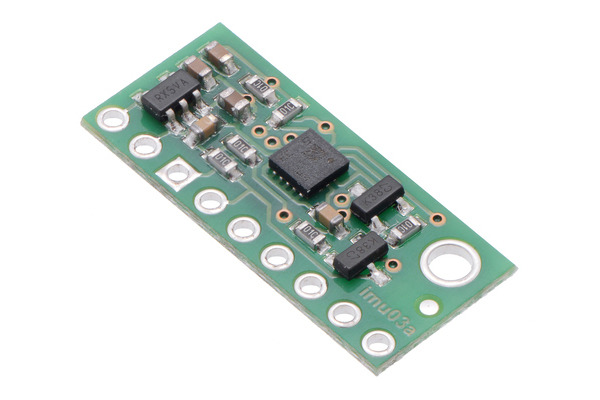
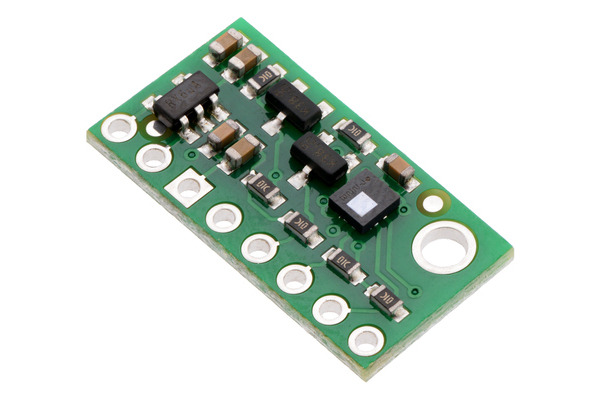
Measure acceleration and track rotation with these accelerometers, gyroscopes, compasses/magnetometers, and combined inertial measurement units (IMUs) and orientation sensors.
|
|
|
These IR distance sensors make it easy to detect and range objects. Our Sharp sensors are less expensive than our sonar range finders and they have higher update rates, but their maximum detection range is shorter.
|
|
|
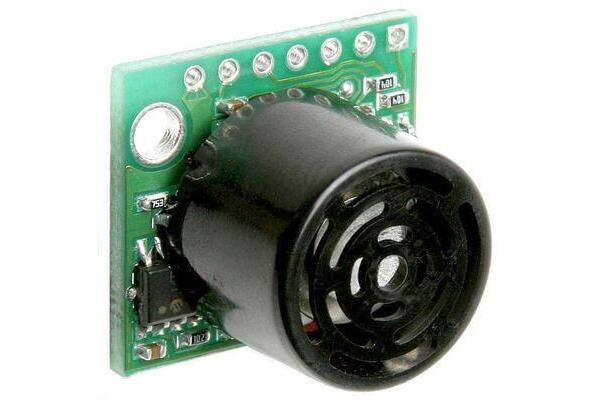
Accurately measure distances over a wide range with our assortment of ultrasonic distance sensors from Maxbotix and Parallax.
|
|
|
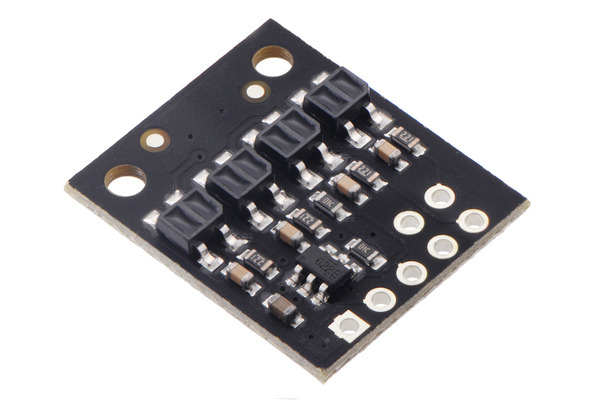
These sensors use pairs of infrared LEDs and phototransistors to measure how much of the emitted IR light is being reflected from a nearby surface. They are great for edge detection and line following.
|
|
|
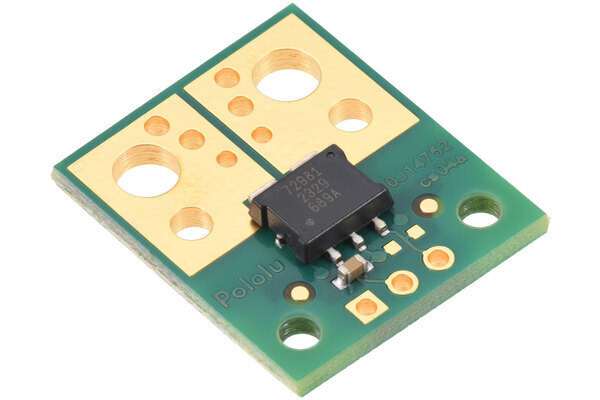
An assortment of unidirectional and bidirectional Hall effect-based current sensors. They offer a very low-resistance current path and electrical isolation between the current source and the measuring circuit. You can use these sensors to monitor your motor current, detect current spikes, or even to make inexpensive current probes for your oscilloscope.
|
|
|
Want to build your own breathalyzer? This variety of semiconductor gas sensors makes it possible to measure concentrations of gasses such as alcohol, methane, propane, butane, and carbon monoxide.
|
|
|
|
|
This module features a fixed-gain, 38 kHz modulated IR sensor and a corresponding IR LED with oscillator circuit to make a tiny proximity sensor. This high-brightness version draws an average of 16 mA and has a typical sensing range up to approximately 24 inches (60 cm).
|
|
|
|
|
|
|
This module features a fixed-gain, 38 kHz modulated IR sensor and a corresponding IR LED with oscillator circuit to make a tiny proximity sensor. This low-brightness version draws an average of 8 mA and has a typical sensing range up to approximately 12 inches (30 cm).
|
|
|
|
|
|
|
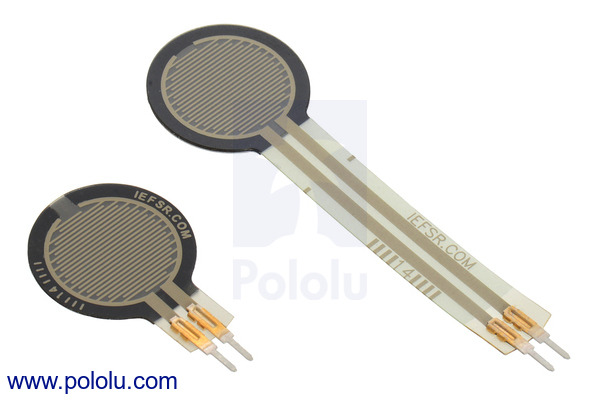
This force-sensing resistor (FSR) from Interlink Electronics is a passive component that exhibits a decrease in resistance when there is an increase in the force applied to the small, circular active area (0.2"/5mm diameter), allowing you to create a sensor that is able to detect force or pressure. The polymer thick film (PFT) device is optimized for use in human touch control of electronic devices and can sense an applied force ranging from a few dozen grams to over 10 kg (22 lb).
|
|
|
|
|
|
|
This force-sensing resistor (FSR) from Interlink Electronics is a passive component that exhibits a decrease in resistance when there is an increase in the force applied to the circular active area (0.5"/12.7mm diameter), allowing you to create a sensor that is able to detect force or pressure. The polymer thick film (PFT) device is optimized for use in human touch control of electronic devices and can sense an applied force ranging from a few dozen grams to over 10 kg (22 lb).
|
|
|
|
|
|
|
This force-sensing resistor (FSR) from Interlink Electronics is a passive component that exhibits a decrease in resistance when there is an increase in the force applied to the 1.5"×1.5" (38×38 mm) active area, allowing you to create a sensor that is able to detect force or pressure. The polymer thick film (PFT) device is optimized for use in human touch control of electronic devices and can sense an applied force ranging from a few dozen grams to over 10 kg (22 lb).
|
|
|
|
|
|
|
This force-sensing resistor (FSR) from Interlink Electronics is a passive component that exhibits a decrease in resistance when there is an increase in the force applied to the 24"×0.25" (610×6.3 mm) active area, allowing you to create a sensor that is able to detect force or pressure. The polymer thick film (PFT) device is optimized for use in human touch control of electronic devices and can sense an applied force ranging from a few dozen grams to over 10 kg (22 lb).
|
|
|
|
|
|
|
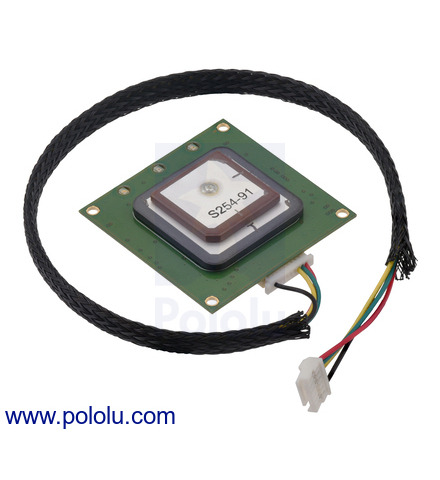
The Locosys LS20031 GPS receiver integrates a MediaTek MT3339 66-channel GPS chip with a ceramic antenna to create a complete GPS module that can track up to 66 GPS satellites at a time. The GPS module supports up to a 10Hz update rate, a built-in rechargeable battery for rapid satellite acquisition (external power is still required for normal operation), and more than 6 different NMEA ASCII sentences that are output to a TTL-level serial port.
|
|
|
|
|
|
|
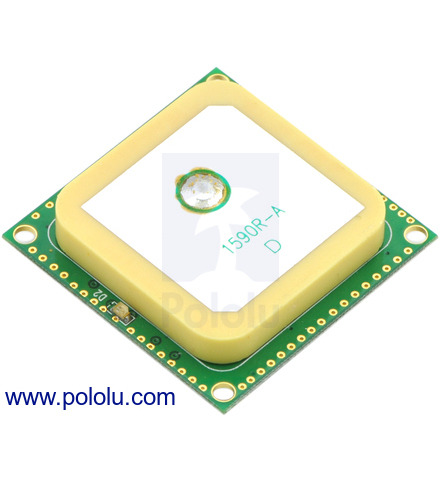
The Locosys LS20031 GPS receiver integrates a MediaTek MT3329 66-channel GPS chip with a ceramic antenna to create a complete GPS module that can track up to 66 GPS satellites at a time.
Clearance: This product has been replaced by the newer 66-Channel LS20031 GPS Receiver Module (MT3339 Chipset) and will be discontinued when stock runs out.
|
|
|
|
|
|
|
This reflectance sensor module is designed for use with the Zumo shield for Arduino. It has six IR LED/phototransistor pairs that can be used for line following or edge detection; each sensor provides an independent, digital I/O-measurable output. The array draws approximately 40 mA when the emitters are on, and an optional input allows the emitters to be turned off for additional sensing or power-saving options.
|
|
|
|
|
|
|
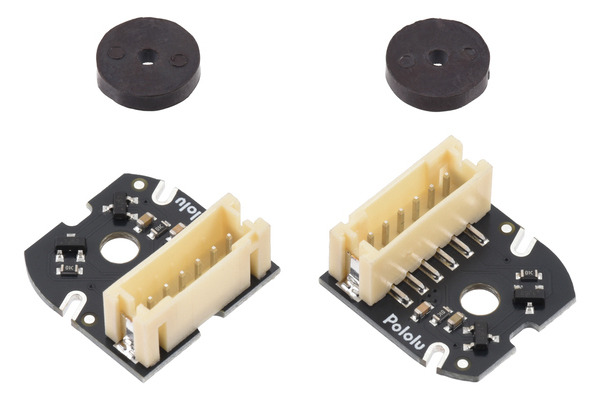
This quadrature encoder works with our micro metal gearmotors, 42×19mm wheel, and extended bracket to measure the rotation speed and direction of the wheel. With twelve teeth on the wheel, the system provides a resolution of 48 counts per revolution, which corresponds to a linear resolution of just under 3 mm or 1/8".
|
|
|
|
|
|
|
The Pololu IR beacon is a compact board that is used in pairs to allow robots to locate each other. Each board has infrared emitters that shine in all directions and four IR receivers for detecting the other beacon. The IR beacons have a range of about fifteen feet indoors. This item is for a pair of beacons in one package.
|
|
|
|
|
|
|
The Pololu IR beacon is a compact board that is used in pairs to allow robots to locate each other. Each board has infrared emitters that shine in all directions and four IR receivers for detecting the other beacon. The IR beacons have a range of about fifteen feet indoors. This item is for a single unit.
|
|
|
|
|
|
|
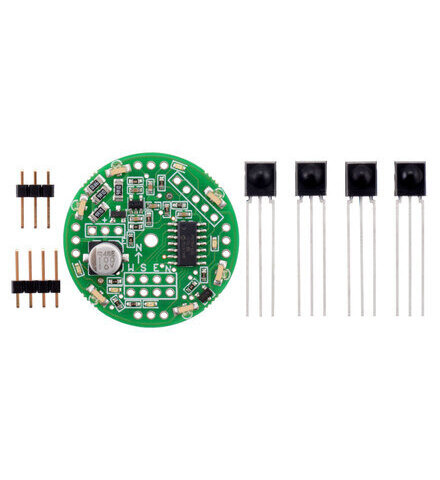
The IR beacon development board is just an assembled IR Beacon PCB with no IR sensors or firmware. This item is intended for advanced users who want to customize their IR beacon functionality by writing their own firmware. No documentation is shipped with this IR Beacon Development kit.
|
|
|
|
|
|
|
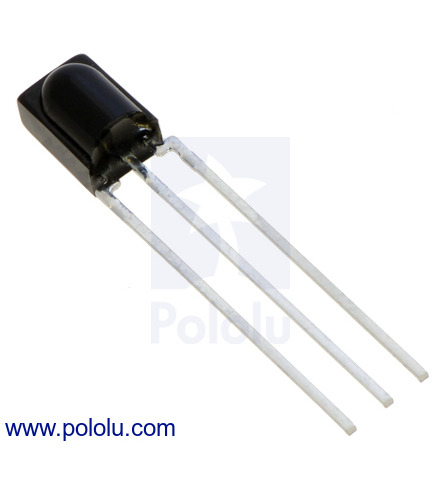
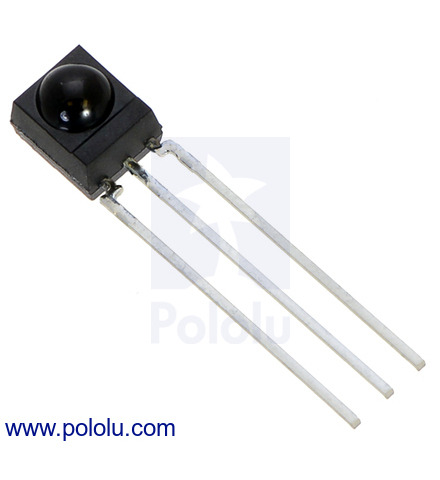
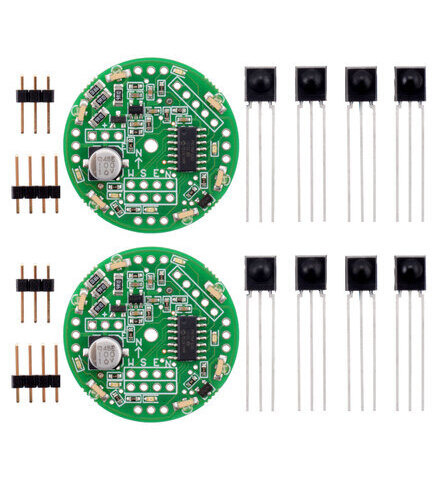
This is the IR receiver used in the Pololu IR Beacon. This sensor family features a wide operating voltage range and allows for relatively high data rates; this particular unit is tuned for a 56 kHz carrier frequency.
|
|
|
|
|
|
|
The passive infrared detector (PID) motion sensor SE-10, also called a passive infrared (PIR) sensor, detects movement of infrared light sources at 7 to 14 μm. People emit infrared radiation from 8 to 14 μm, which makes this an excellent sensor for detecting human movement. Two infrared detector “pixels” allow the detector to filter out changes affecting the whole sensing area, like weather or light.
|
|
|
|
|
|
|
The Parallax ColorPAL combines an RGB LED, a light sensor, and a microcontroller to make a color sensor that can also be used as an ambient light detector and a color generator. Readings are reported via a 1-wire asynchronous serial interface.
|
|
|
|
|
|
|
The Melexis MLX90614ESF-AAA is a high-accuracy, high-resolution, non-contact thermometer with a 90-degree field of view. It has a measurement resolution of 0.02°C and is factory calibrated for a wide -70 to 380°C object temperature range. The sensor uses an SMBus (I²C-compatible) digital interface and can be configured to output a customizable 10-bit PWM output for continuous readings.
|
|
|
|
|
|
|
Got weather? This board can handle it. The USB Weather Board from SparkFun includes on-board sensors for barometric pressure, humidity, temperature, and light level.
|
|
|
|
|
|
|
This carrier for ST’s LPS331AP digital barometer measures pressures from 260 mbar to 1260 mbar (26 kPa to 126 kPa) with absolute accuracy down to ±2 mbar (0.2 kPa) and typical RMS noise of 0.02 mbar (0.002 kPa) in high-resolution mode. These pressures can easily be converted to altitudes. The board has a 3.3 V linear regulator and integrated level shifters that allow it to work over an input voltage range of 2.5 V to 5.5 V, and the 0.1″ pin spacing makes it easy to use with standard solderless breadboards and 0.1″ perfboards. The sensor offers I²C and SPI interfaces.
|
|
|
|
|
|
|
This is a simple breakout board from SparkFun for the BMP085 high-precision, low-power barometric pressure sensor. The BMP085 offers a measuring range of 30 to 110 kPa with an absolute accuracy of down to 0.1 kPa. It uses piezo-resistive technology for robustness, accuracy and linearity as well as long term stability. This sensor supports a voltage supply between 1.8 and 3.6VDC. It is designed to be connected directly to a microcontroller via an I²C bus.
|
|
|
|
|
|
|
This is a simple breakout board from SparkFun for the MPL3115A2 precision altimeter. The MPL3115A2 offers a measuring range of 50 to 110 kPa with an absolute accuracy of down to 0.4 kPa. It has an altitude resolution down to 30 cm. This board should be powered with 1.95 and 3.6 V, and is designed to be connected to a microcontroller via I²C.
|
|
|
|
|
|
|
The MPL115A1 is a MEMS digital barometer that takes barometric pressure readings with a range of 50 to 115 kPa and an accuracy of ±1 kPa and provides the results over an SPI interface. This sensor also doubles as a temperature sensor that operates from -40 to 105 °C. The breakout board’s pins are spaced 0.1" apart making it easy to use with standard breadboards and 0.1" perfboards.
|
|
|
|
|
|
|
Sparkfun’s carrier board for the HIH-4030 relative humidity (%RH) sensor from Honeywell outputs an analog voltage that varies nearly linearly with humidity. It operates at 5 V while drawing only 200 μA and has a 0.1" pin spacing that makes it compatible with standard breadboards and perfboards.
|
|
|
|
|
|
|
Ready to add sound detection to your next project? This small breakout board from SparkFun couples a tiny microelectromechanical system (MEMS) microphone with a 67x gain external amplifying circuit, converting sound into analog voltage signals that can be measured by a microcontroller’s analog-to-digital converter (ADC). The unit comes fully assembled as shown and works from 1.5 to 3.3 V.
|
|
|
|
|
|
|
Ready to add sound detection to your next project? This compact breakout board from SparkFun couples a small electret microphone with a 100x opamp, converting sound into amplified analog voltages that can be measured by a microcontroller’s analog-to-digital converter (ADC). The unit comes fully assembled as shown and works from 2.7 to 5.5 V.
|
|
|
|
|
|
|
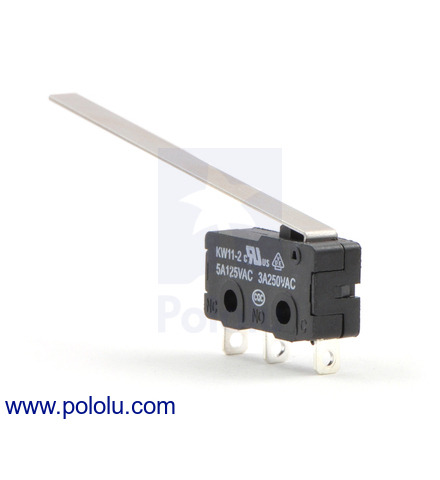
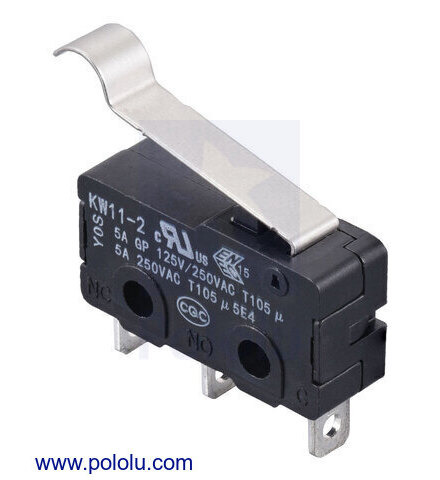
This single-pole, double-throw (SPDT) switch can be used as a general-purpose micro switch, but the long lever arm makes it especially useful as a tactile bump sensor for your robot (e.g whiskers or antennae). The switch body dimension is 20.0 x 6.4 x 10.2 mm, and the lever arm is 50 mm long.
|
|
|
|
|
|
|
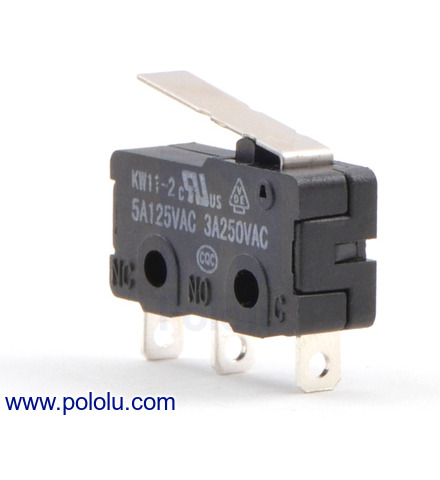
This single-pole, double-throw (SPDT) switch can be used as a general-purpose micro switch or tactile bump sensor for your robot. The switch body dimension is 20.0 x 6.4 x 10.2 mm, and the lever arm is 16.7 mm long.
|
|
|
|
|
|
|
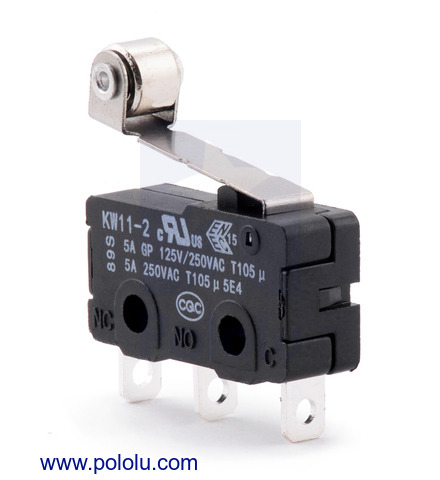
This single-pole, double-throw (SPDT) switch can be used as a general-purpose micro switch or tactile bump sensor for your robot. The switch body dimension is 20.0 x 6.4 x 10.2 mm, and the 16.3mm lever arm is has a roller at the tip.
|
|
|
|
|
|
|
This single-pole, double-throw (SPDT) switch can be used as a general-purpose micro switch or tactile bump sensor for your robot. The switch body dimension is 20.0 x 6.4 x 10.2 mm, and the 15.6mm lever arm has a semicircular bump at the tip that simulates a roller.
|
|
|
|
|
|
|
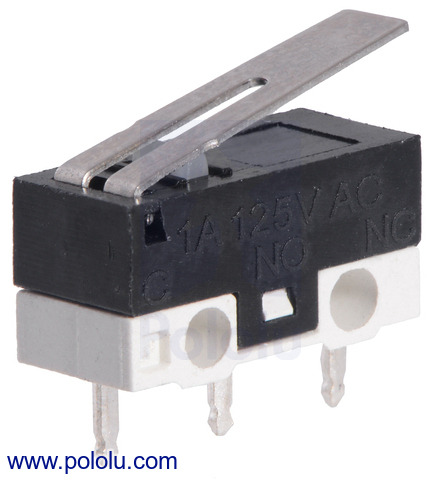
This miniature single-pole, double-throw (SPDT) switch can be used as a general-purpose micro switch or as a small tactile bump sensor for your robot. The switch body dimension is 12.8 x 6.0 x 6.5 mm, and the lever arm is 13.5 mm long.
|
|
|
|
|
|
|
Learn about electronic motion detectors with this deluxe kit that includes a high-quality enclosure with a mounting bracket. The motion detector makes a loud, doorbell-like “ding-dong” sound when it detects motion. The kit is based on a pyroelectric infrared (PIR) sensor, which is a unique sensor that you can use to give your projects the ability to react to your presence.
|
|
|
|
|