Specials!
-
Coupon code:
POD260805P5410
 Items
#5410, #5411, #5412:
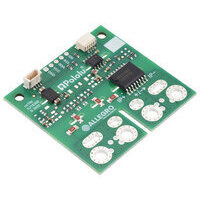
ACS37800KMACTR-030B3-I2C Power Monitor Carrier with Secondary I²C Isolation
$6.00 off
Limit 3 per item per customer
Items
#5410, #5411, #5412:
ACS37800KMACTR-030B3-I2C Power Monitor Carrier with Secondary I²C Isolation
$6.00 off
Limit 3 per item per customer
-
Coupon code:
POD260805P3172
 Item
#3172:
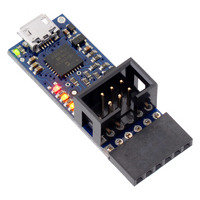
Pololu USB AVR Programmer v2.1
$17.95
$13.95
Save
22%
Item
#3172:
Pololu USB AVR Programmer v2.1
$17.95
$13.95
Save
22%
-
Coupon code:
POD260806P3551
 Item
#3551:
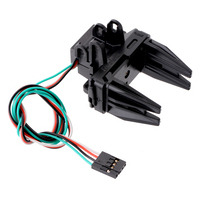
Micro Gripper Kit with Position Feedback Servo
$29.95
$22.00
Save
27%
Limit 3 per customer
Item
#3551:
Micro Gripper Kit with Position Feedback Servo
$29.95
$22.00
Save
27%
Limit 3 per customer
-
Coupon code:
POD260806P2812
 Item
#2812:
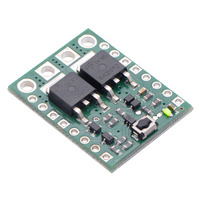
Big Pushbutton Power Switch with Reverse Voltage Protection, MP
$5.95
$4.75
Save
20%
Item
#2812:
Big Pushbutton Power Switch with Reverse Voltage Protection, MP
$5.95
$4.75
Save
20%
-
Coupon code:
ACS37200INTRO
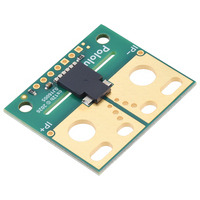 ACS37200 Current Sensor Carriers
$2.00 off
Limit 1 per item per customer
ACS37200 Current Sensor Carriers
$2.00 off
Limit 1 per item per customer
-
Coupon code:
24V25DMTRINTRO
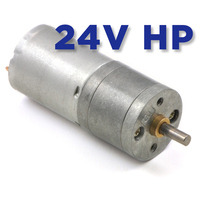 24V High-Power (HP) 25D mm Gearmotors
20% off
Limit 3 per item per customer
24V High-Power (HP) 25D mm Gearmotors
20% off
Limit 3 per item per customer
-
Coupon code:
S9V11E2XINTRO
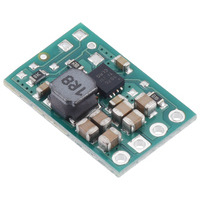 S9V11E2x Step-up/Step-Down Voltage Regulators
$4.95 to $5.49
$3.77
Save
24–31%
S9V11E2x Step-up/Step-Down Voltage Regulators
$4.95 to $5.49
$3.77
Save
24–31%
-
Coupon code:
TB67S579CINTRO
 Items
#5247, #5248:
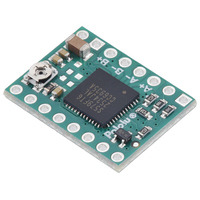
TB67S579FTG Stepper Motor Driver Compact Carrier
$9.95 to $10.95
$7.77
Save
22–29%
Items
#5247, #5248:
TB67S579FTG Stepper Motor Driver Compact Carrier
$9.95 to $10.95
$7.77
Save
22–29%
-
Coupon code:
POD260810P2999
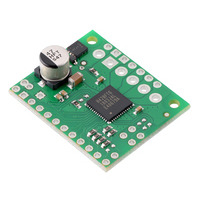 Item
#2999:
TB67H420FTG Dual/Single Motor Driver Carrier
$12.95
$9.95
Save
23%
Item
#2999:
TB67H420FTG Dual/Single Motor Driver Carrier
$12.95
$9.95
Save
23%
-
Coupon code:
POD260810P4440
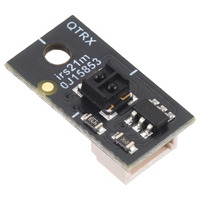 Item
#4440:
QTRX-MD-01A-S Reflectance Sensor: 1-Channel, 8mm Wide, Analog Output, Low Current, Side-Entry Connector
$4.29
$3.33
Save
22%
Item
#4440:
QTRX-MD-01A-S Reflectance Sensor: 1-Channel, 8mm Wide, Analog Output, Low Current, Side-Entry Connector
$4.29
$3.33
Save
22%
-
Coupon code:
TB67S579FINTRO
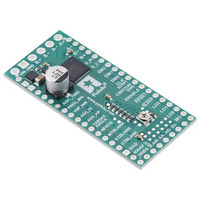 Item
#5249:
TB67S579FTG Stepper Motor Driver Carrier - Full Breakout
$17.95
$14.95
Save
17%
Item
#5249:
TB67S579FTG Stepper Motor Driver Carrier - Full Breakout
$17.95
$14.95
Save
17%
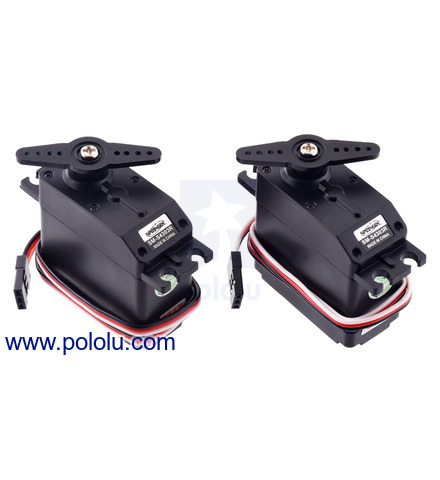
| Pololu item #: 3448 | |
| Brand: SpringRC | supply outlook |

|
|
These are surplus SM-S4303R standard-sized servos continuous rotation servos that we are able to offer at specially discounted pricing. They are functionally identical to our stock SM-S4303R servos except for the direction of rotation, which is reversed, and we are selling them in pairs to help differentiate them. This product is a two-pack of servos, so ordering one unit will get you two servos.
Key specs at 6 V: 54 RPM (no-load), 71 oz-in (5.1 kg-cm), 41 g, CW rotation for pulse widths above the rest point.
| Pololu item #: 2125 | |
| Brand: Pololu | |
| Status: Clearance | |
|
|
|
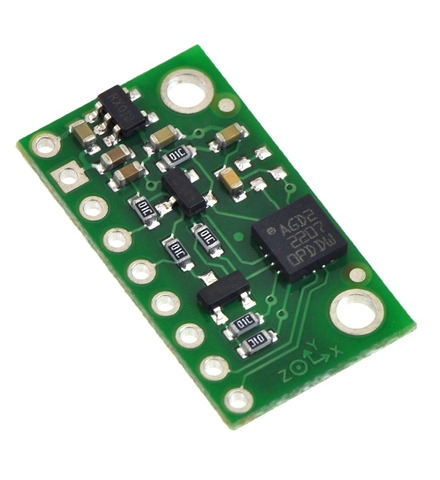
This sensor is a carrier/breakout board for the ST L3GD20 three-axis gyroscope, which measures the angular rates of rotation about the roll (X), pitch (Y), and yaw (Z) axes. Angular velocity measurements with a configurable range of ±250°/s, ±500°/s, or ±2000°/s can be read through a digital I²C or SPI interface. The board has a 3.3 V linear regulator and integrated level-shifters that allow it to work over an input voltage range of 2.5–5.5 V, and the 0.1″ pin spacing makes it easy to use with standard solderless breadboards and 0.1″ perfboards.
Clearance: This board is being replaced by the newer L3GD20H carrier and LSM6DS33 carrier.
| Pololu item #: 2289 | |
| Brand: Pololu | |
| Status: Clearance | |
|
|
|

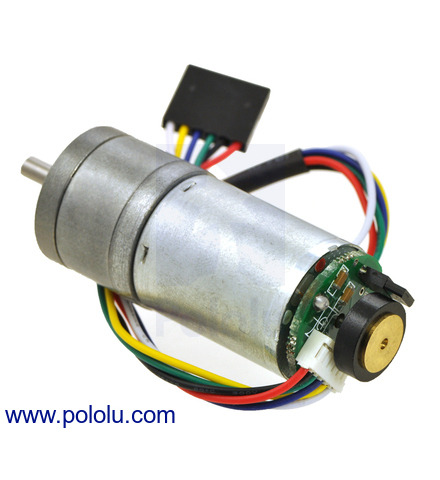
Clearance: This is being replaced by a functionally identical version that has a removable protective end cap over the encoder.
This gearmotor consists of a low-power, 6 V brushed DC motor combined with a 226.76:1 metal spur gearbox, and it has an integrated 48 CPR quadrature encoder on the motor shaft, which provides 10,884.47 counts per revolution of the gearbox’s output shaft. The gearmotor is cylindrical, with a diameter just under 25 mm, and the D-shaped output shaft is 4 mm in diameter and extends 12.5 mm from the face plate of the gearbox.
Key specifications:
| voltage | no-load performance | stall extrapolation |
|---|---|---|
| 6 V | 25 RPM, 250 mA | 16 kg⋅cm (220 oz⋅in), 2.4 A |
| Pololu item #: 2291 | |
| Brand: Pololu | |
| Status: Clearance | |
|
|
|
Clearance: This is being replaced by a functionally identical version that has a removable protective end cap over the encoder.
This gearmotor consists of a low-power, 6 V brushed DC motor combined with a 498.87:1 metal spur gearbox, and it has an integrated 48 CPR quadrature encoder on the motor shaft, which provides 23,945.84 counts per revolution of the gearbox’s output shaft. The gearmotor is cylindrical, with a diameter just under 25 mm, and the D-shaped output shaft is 4 mm in diameter and extends 12.5 mm from the face plate of the gearbox.
Key specifications:
| voltage | no-load performance | stall extrapolation |
|---|---|---|
| 6 V | 11 RPM, 250 mA | 30 kg⋅cm (400 oz⋅in), 2.4 A |
| Pololu item #: 1116 | |
| supply outlook | |
| Status: Clearance | |
|
|
|
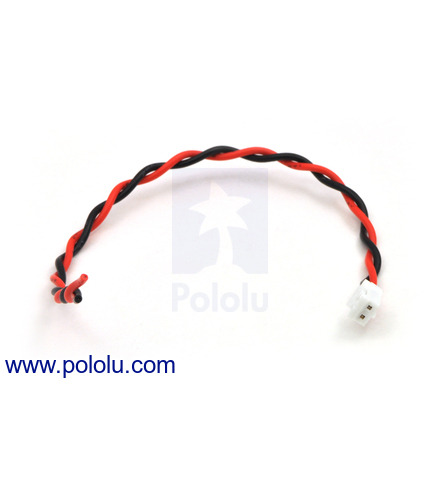
This 14 cm (5.5″) cable has two 26 AWG conductors with a 2mm-pitch 2-pin female JST PH-style connector. The other ends of the wires are unterminated; they can be cut to length to match your application. The red and black wires are twisted together to reduce noise.
Note: This cable has the red wire on pin 1 and black wire on pin 2, which differs from the color order convention followed by most of our other JST PH cables.


Home | Forum | Blog | Support | Ordering Information | Lists | Distributors | BIG Order Form | About | Contact
© 2001–2026 Pololu Corporation