New Products
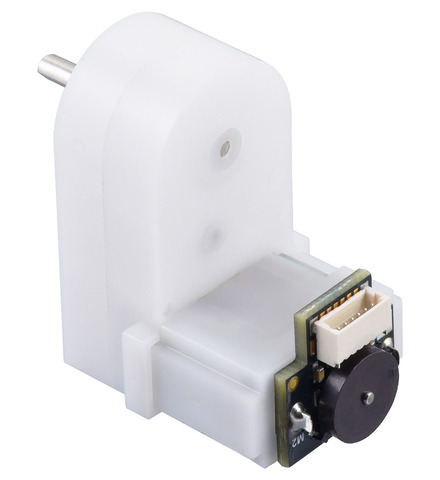
| Pololu item #: 3549 | |
| Brand: PCX | supply outlook |
| Status: Active and Preferred | |

|
|
This small gearmotor features a brushed DC motor with a 120:1 plastic gearbox and a quadrature encoder with side connector (cables sold separately). While intended for operation at 4.5 V, it runs comfortably in the 3 V to 6 V range. The gearbox has a 9.7 mm long, 3 mm diameter D-shaped output shaft, and a built-in safety clutch helps protect the gears from excessive loads.
| voltage | no-load performance | stall extrapolation | encoder type |
|---|---|---|---|
| 4.5 V | 150 RPM, 130 mA | 1.8 kg⋅cm (25 oz⋅in), 1.25 A | 12 CPR incremental quadrature with side connector |
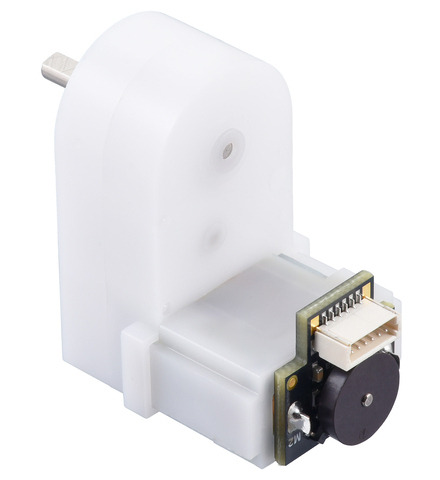
| Pololu item #: 3548 | |
| Brand: PCX | supply outlook |
| Status: Active and Preferred | |
|
|
|
This small gearmotor features a brushed DC motor with a 120:1 plastic gearbox and a quadrature encoder with back connector (cables sold separately). While intended for operation at 4.5 V, it runs comfortably in the 3 V to 6 V range. The gearbox has a 9.7 mm long, 3 mm diameter D-shaped output shaft, and a built-in safety clutch helps protect the gears from excessive loads.
| voltage | no-load performance | stall extrapolation | encoder type |
|---|---|---|---|
| 4.5 V | 150 RPM, 130 mA | 1.8 kg⋅cm (25 oz⋅in), 1.25 A | 12 CPR incremental quadrature with back connector |
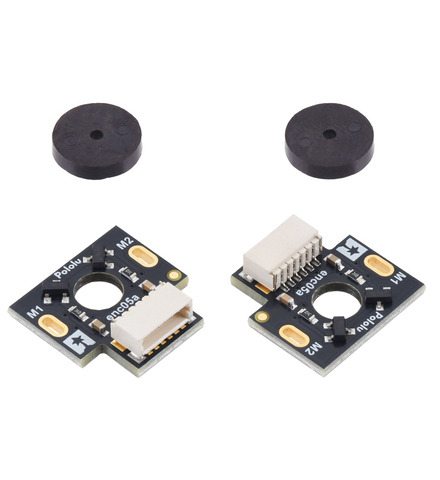
| Pololu item #: 3547 | |
| Brand: Pololu | supply outlook |
| Status: Active and Preferred | |
|
|
|


Add quadrature encoders to your mini plastic gearmotors with this kit that uses a magnetic disc and Hall effect sensors to provide 12 counts per revolution of the motor shaft. The sensors operate from 2.7 V to 18 V and provide digital outputs that can be connected directly to a microcontroller or other digital circuit. These encoders have a side-entry, 6-pin male JST SH-type connector, and we have compatible cables available in a variety of lengths.
This kit includes two encoder boards and two magnetic discs.
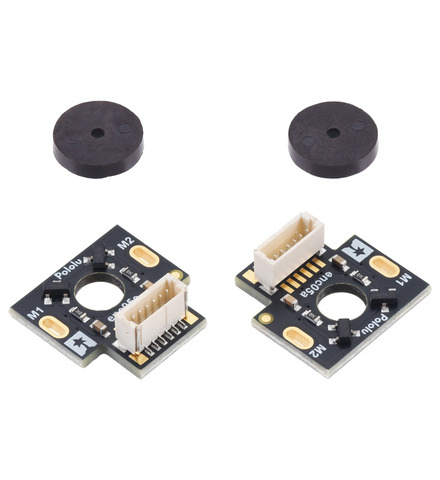
| Pololu item #: 3546 | |
| Brand: Pololu | supply outlook |
| Status: Active and Preferred | |
|
|
|
Add quadrature encoders to your mini plastic gearmotors with this kit that uses a magnetic disc and Hall effect sensors to provide 12 counts per revolution of the motor shaft. The sensors operate from 2.7 V to 18 V and provide digital outputs that can be connected directly to a microcontroller or other digital circuit. These encoders have a top-entry, 6-pin male JST SH-type connector, and we have compatible cables available in a variety of lengths.
This kit includes two encoder boards and two magnetic discs.
| Pololu item #: 5249 | |
| Brand: Pololu | supply outlook |
| Status: Active and Preferred | |
|
|
|
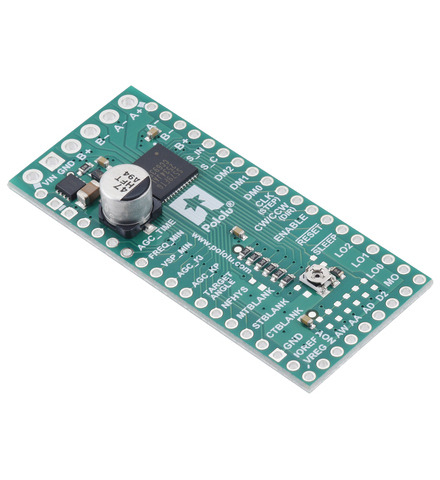
This breakout board for Toshiba’s TB67S579FTG microstepping bipolar stepper motor driver provides access to all of the driver’s pins, enabling use of its many features, including advanced dynamic mixed decay (ADMD), automatic gain control (AGC), and automatic wave generation system (AWGS). The TB67S579FTG has a wide operating voltage range of 4.5 V to 34 V, and our carrier board can deliver approximately 1.2 A per phase continuously without a heat sink or forced air flow (up to 2 A peak). It features built-in protection against over-current and over-temperature conditions.
| Pololu item #: 5248 | |
| Brand: Pololu | supply outlook |
| Status: Active and Preferred | |
|
|
|
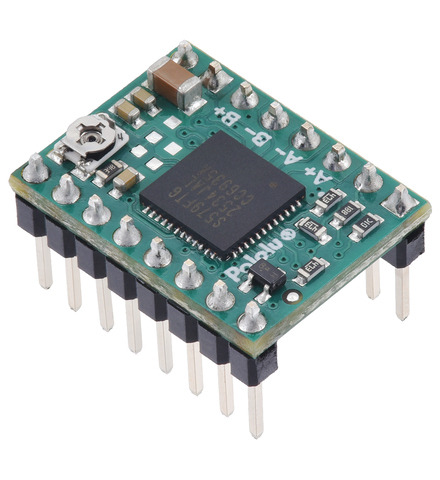
This version of our TB67S579FTG Stepper Motor Driver Compact Carrier ships with male header pins installed, so no soldering is required to use it with an appropriate 16-pin socket or solderless breadboard. The TB67S579FTG has a wide operating voltage range of 4.5 V to 34 V, and our carrier board can deliver approximately 1.1 A per phase continuously without a heat sink or forced air flow (up to 2 A peak). Please see the TB67S579FTG Stepper Motor Driver Compact Carrier product page for more information about the driver.
| Pololu item #: 5247 | |
| Brand: Pololu | supply outlook |
| Status: Active and Preferred | |
|
|
|
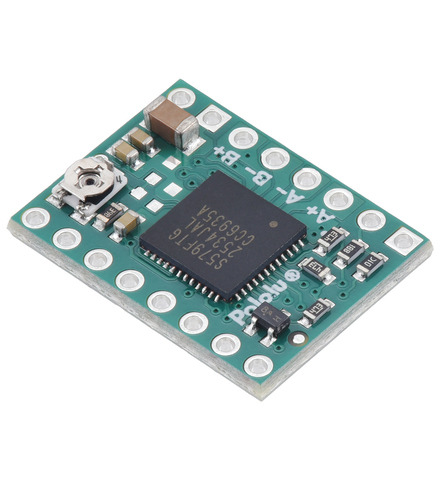
This breakout board for Toshiba’s TB67S579FTG microstepping bipolar stepper motor driver is arranged in the popular 16-pin Pololu form factor, making it a more compact alternative to our full breakout. It features adjustable current limiting and seven microstep resolutions (down to 1/32-step). Additionally, it dynamically selects an optimal decay mode by monitoring the actual motor current, and it can automatically reduce the driving current below the full amount when the motor is lightly loaded to minimize power and heat. The TB67S579FTG has a wide operating voltage range of 4.5 V to 34 V, and our carrier board can deliver approximately 1.1 A per phase continuously without a heat sink or forced air flow (up to 2 A peak). It features built-in protection against over-current and over-temperature conditions.
| Pololu item #: 5719 | |
| Brand: Pololu | supply outlook |
| Status: Active and Preferred | |
|
|
|
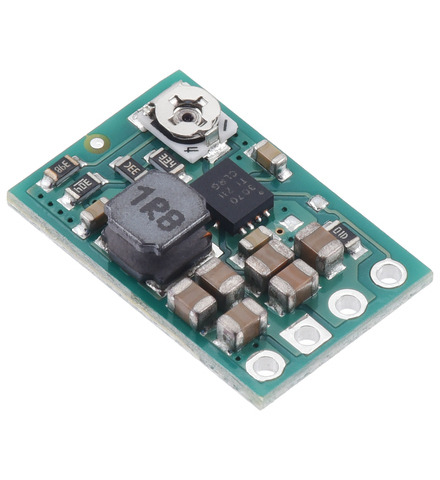
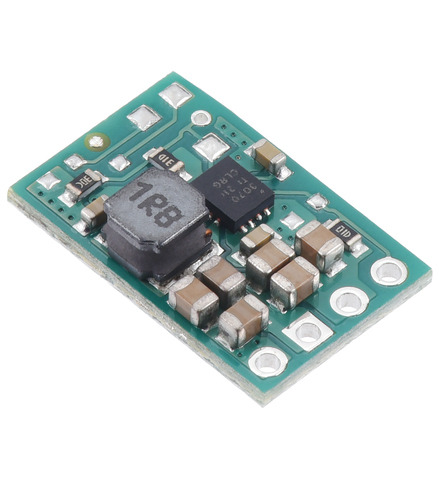
| Output voltage | Typical max output current1 | Input voltage range | Low-voltage cutoff | Size |
|---|---|---|---|---|
| 2.5 V – 9 V (adjustable) | 1.7 A | 2 V – 16 V (3 V startup) |
– | 0.43″ × 0.65″ × 0.16″ |
Note 1: For input voltages close to the output, after startup. Startup current is limited to approximately 700 mA until output voltage reaches the nominal voltage. After startup, the actual achievable maximum continuous current is a function of input and output voltage and is limited by thermal dissipation. See the output current graphs on the product page for more information.
| Pololu item #: 5716 | |
| Brand: Pololu | supply outlook |
| Status: Active and Preferred | |
|
|
|
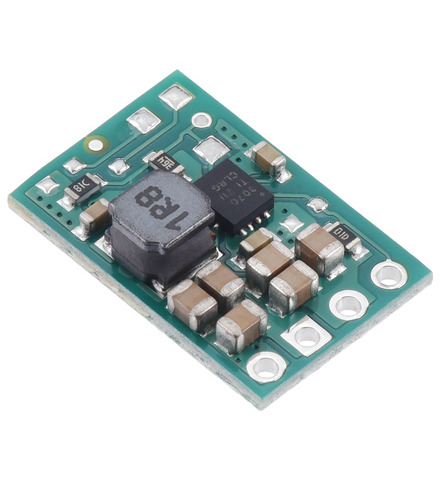
| Output voltage | Typical max output current1 | Input voltage range | Low-voltage cutoff | Size |
|---|---|---|---|---|
| 9 V | 1.7 A | 2 V – 16 V (3 V startup) |
– | 0.43″ × 0.65″ × 0.16″ |
Note 1: For input voltages close to the output, after startup. Startup current is limited to approximately 700 mA until output voltage reaches the nominal voltage. After startup, the actual achievable maximum continuous current is a function of input and output voltage and is limited by thermal dissipation. See the output current graphs on the product page for more information.
| Pololu item #: 5713 | |
| Brand: Pololu | supply outlook |
| Status: Active and Preferred | |
|
|
|
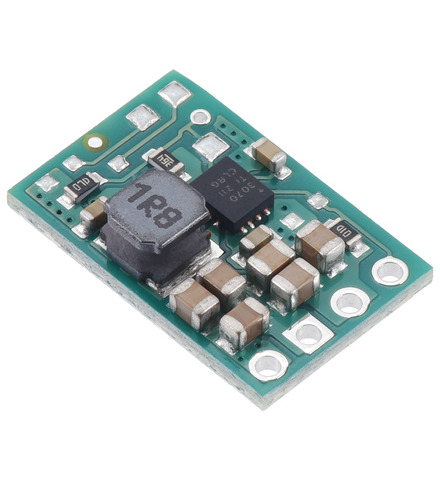
| Output voltage | Typical max output current1 | Input voltage range | Low-voltage cutoff | Size |
|---|---|---|---|---|
| 5 V | 1.7 A | 2 V – 16 V (3 V startup) |
– | 0.43″ × 0.65″ × 0.16″ |
Note 1: For input voltages close to the output, after startup. Startup current is limited to approximately 700 mA until output voltage reaches the nominal voltage. After startup, the actual achievable maximum continuous current is a function of input and output voltage and is limited by thermal dissipation. See the output current graphs on the product page for more information.
| Pololu item #: 5712 | |
| Brand: Pololu | supply outlook |
| Status: Active and Preferred | |
|
|
|
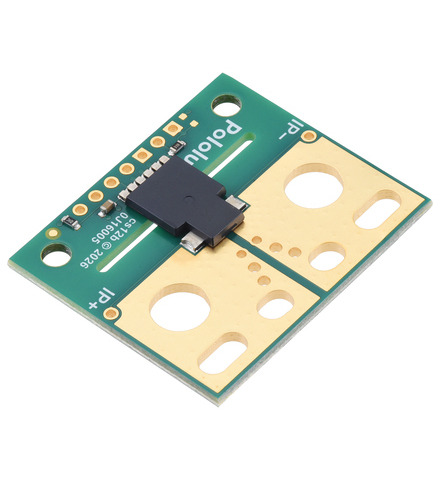
| Output voltage | Typical max output current1 | Input voltage range | Low-voltage cutoff | Size |
|---|---|---|---|---|
| 3.3 V | 1.5 A | 2 V – 16 V (3 V startup) |
– | 0.43″ × 0.65″ × 0.16″ |
Note 1: For input voltages close to the output, after startup. Startup current is limited to approximately 700 mA until output voltage reaches the nominal voltage. After startup, the actual achievable maximum continuous current is a function of input and output voltage and is limited by thermal dissipation. See the output current graphs on the product page for more information.
| Pololu item #: 5795 | |
| Brand: Pololu | supply outlook |
| Status: Rationed (Active and Preferred) | |
|
|
|
This is the large version of a simple carrier for Allegro’s ACS37200LLXTR-200B5 Hall effect-based, electrically isolated current sensor that offers an extra-low-resistance (~0.05 mΩ) IC current path, a 150 kHz bandwidth with <4 µs response time, and an overcurrent fault output with a user-configurable threshold.
| Part Suffix | Range | Supply Voltage | Sensitivity | Zero Point | Size | PCB layers |
|---|---|---|---|---|---|---|
| 200B5 | ±200 A (bidirectional) | 4.5 V to 5.5 V | 10 mV/A | 2.5 V | 1.4″×1.2″ | 6 |
| Pololu item #: 5791 | |
| Brand: Pololu | supply outlook |
| Status: Rationed (Active and Preferred) | |
|
|
|
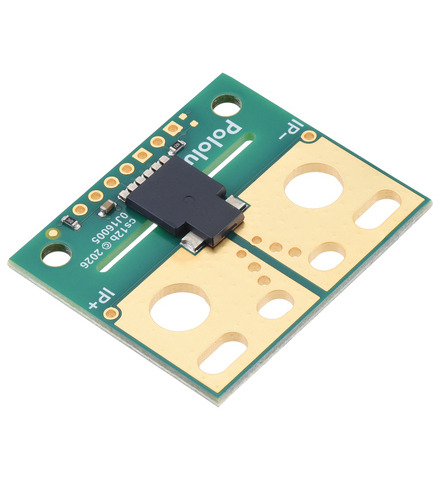
This is the large version of a simple carrier for Allegro’s ACS37200LLXTR-150B3 Hall effect-based, electrically isolated current sensor that offers an extra-low-resistance (~0.05 mΩ) IC current path, a 150 kHz bandwidth with <4 µs response time, and an overcurrent fault output with a user-configurable threshold.
| Part Suffix | Range | Supply Voltage | Sensitivity | Zero Point | Size | PCB layers |
|---|---|---|---|---|---|---|
| 150B3 | ±150 A (bidirectional) | 3.15 V to 3.45 V | 8.8 mV/A | 1.65 V | 1.4″×1.2″ | 6 |
| Pololu item #: 5784 | |
| Brand: Pololu | supply outlook |
| Status: Rationed (Active and Preferred) | |
|
|
|
This is the compact version of a simple carrier for Allegro’s ACS37200LLXTR-150B5 Hall effect-based, electrically isolated current sensor that offers an extra-low-resistance (~0.05 mΩ) IC current path, a 150 kHz bandwidth with <4 µs response time, and an overcurrent fault output with a user-configurable threshold.
| Part Suffix | Range | Supply Voltage | Sensitivity | Zero Point | Size | PCB layers |
|---|---|---|---|---|---|---|
| 150B5 | ±150 A (bidirectional) | 4.5 V to 5.5 V | 13.3 mV/A | 2.5 V | 0.8″×1.1″ | 2 |
| Pololu item #: 5780 | |
| Brand: Pololu | supply outlook |
| Status: Rationed (Active and Preferred) | |
|
|
|
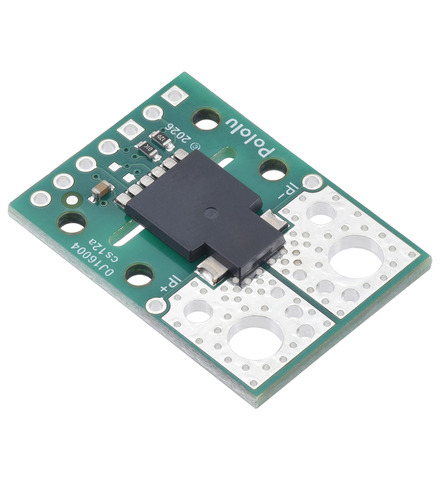
This is the compact version of a simple carrier for Allegro’s ACS37200LLXTR-100B3 Hall effect-based, electrically isolated current sensor that offers an extra-low-resistance (~0.05 mΩ) IC current path, a 150 kHz bandwidth with <4 µs response time, and an overcurrent fault output with a user-configurable threshold.
| Part Suffix | Range | Supply Voltage | Sensitivity | Zero Point | Size | PCB layers |
|---|---|---|---|---|---|---|
| 100B3 | ±100 A (bidirectional) | 3.15 V to 3.45 V | 13.2 mV/A | 1.65 V | 0.8″×1.1″ | 2 |
| Pololu item #: 5727 | |
| Brand: Pololu | supply outlook |
| Status: Active and Preferred | |
|
|
|
This gearmotor consists of a high-power, 24 V brushed DC motor combined with a 98.78:1 metal spur gearbox, and it has an integrated 48 CPR quadrature encoder on the motor shaft, which provides 4741.44 counts per revolution of the gearbox’s output shaft. The gearmotor is cylindrical, with a diameter just under 25 mm, and the D-shaped output shaft is 4 mm in diameter and extends 12.5 mm from the face plate of the gearbox. This gearmotor is also available without an encoder.
Key specifications:
| voltage | no-load performance | stall extrapolation |
|---|---|---|
| 24 V | 100 RPM, 100 mA | 29 kg⋅cm (400 oz⋅in), 2.7 A |
| Pololu item #: 5723 | |
| Brand: Pololu | supply outlook |
| Status: Active and Preferred | |
|
|
|
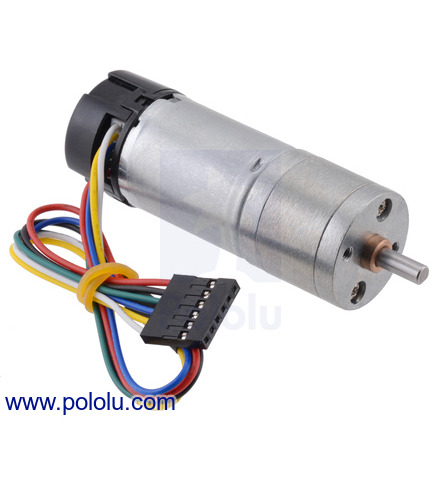
This gearmotor consists of a high-power, 24 V brushed DC motor combined with a 20.4:1 metal spur gearbox, and it has an integrated 48 CPR quadrature encoder on the motor shaft, which provides 979.62 counts per revolution of the gearbox’s output shaft. The gearmotor is cylindrical, with a diameter just under 25 mm, and the D-shaped output shaft is 4 mm in diameter and extends 12.5 mm from the face plate of the gearbox. This gearmotor is also available without an encoder.
Key specifications:
| voltage | no-load performance | stall extrapolation |
|---|---|---|
| 24 V | 490 RPM, 100 mA | 7.9 kg⋅cm (110 oz⋅in), 2.7 A |
| Pololu item #: 5704 | |
| Brand: Pololu | supply outlook |
| Status: Active and Preferred | |
|
|
|
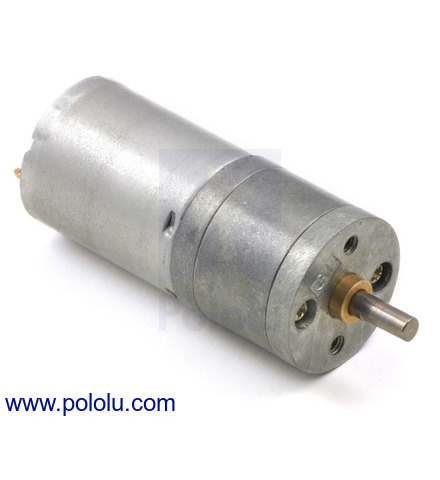
This gearmotor consists of a high-power, 24 V brushed DC motor combined with a 34.014:1 metal spur gearbox. The gearmotor is cylindrical, with a diameter just under 25 mm, and the D-shaped output shaft is 4 mm in diameter and extends 12.5 mm from the face plate of the gearbox. This gearmotor is also available with an integrated encoder.
Key specifications:
| voltage | no-load performance | stall extrapolation |
|---|---|---|
| 24 V | 300 RPM, 80 mA | 12 kg⋅cm (160 oz⋅in), 2.7 A |
| Pololu item #: 5701 | |
| Brand: Pololu | supply outlook |
| Status: Active and Preferred | |
|
|
|
This gearmotor consists of a high-power, 24 V brushed DC motor combined with a 4.4:1 metal spur gearbox. The gearmotor is cylindrical, with a diameter just under 25 mm, and the D-shaped output shaft is 4 mm in diameter and extends 12.5 mm from the face plate of the gearbox. This gearmotor is also available with an integrated encoder.
Key specifications:
| voltage | no-load performance | stall extrapolation |
|---|---|---|
| 24 V | 2300 RPM, 80 mA | 2.0 kg⋅cm (28 oz⋅in), 2.7 A |
| Pololu item #: 5720 | |
| Brand: Pololu | supply outlook |
| Status: Active and Preferred | |
|
|
|
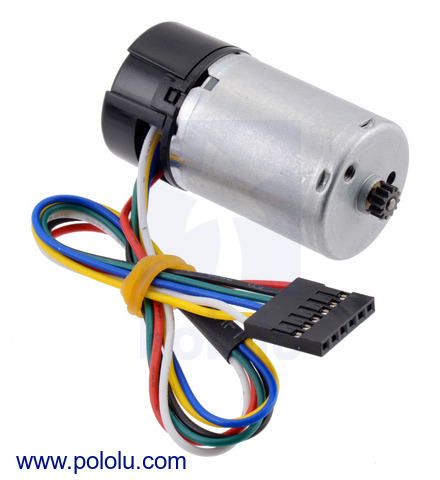
This is the motor and encoder portion of our high-power (HP), 24V 25D mm metal gearmotors with 48 CPR encoders. It does not include a gearbox, but the pinion gear on the output shaft works with all of our 25D mm gearmotor gearboxes, so this can be used as a replacement motor or encoder for those gearboxes.
Key specifications:
| voltage | no-load performance | stall extrapolation |
|---|---|---|
| 24 V | 10,000 RPM, 100 mA | 0.4 kg⋅cm (5.5 oz⋅in), 2.7 A |
| Pololu item #: 5770 | |
| Brand: Pololu | supply outlook |
| Status: Active and Preferred | |
|
|
|
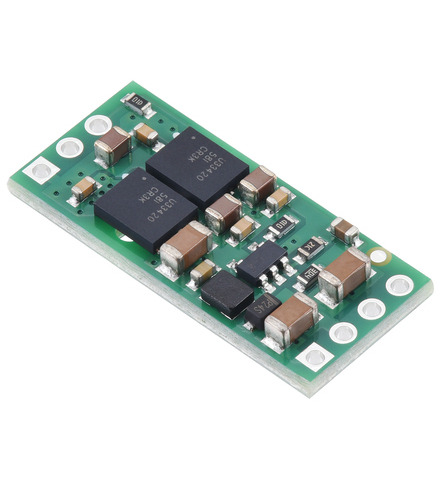
This step-up voltage regulator consists of a pair of isolated DC-to-DC power modules in front of a step-up (boost) regulator. This enables up to 50 mA continuous at 24 V out from a 5 V input with full galvanic isolation between the input and output. The 5 V output of one isolation IC and the 10 V output of the pair of isolation ICs in series are also available.
| Input voltage | Output voltages | Max continuous output current | Size |
|---|---|---|---|
| 4.5 V to 5.5 V | 24 V | 50 mA* | 0.45″ × 1.0″ |
| 10 V | 175 mA* | ||
| 5 V | 300 mA* |
* Max current per channel when the other channel currents are zero.
| Pololu item #: 5767 | |
| Brand: Pololu | supply outlook |
| Status: Active and Preferred | |
|
|
|
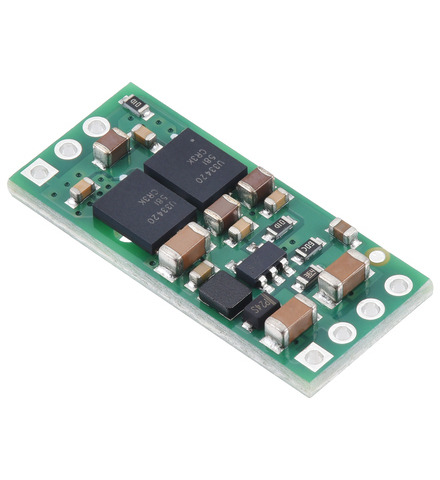
This step-up voltage regulator consists of a pair of isolated DC-to-DC power modules in front of a step-up (boost) regulator. This enables up to 125 mA continuous at 12 V out from a 5 V input with full galvanic isolation between the input and output. The 5 V output of one isolation IC and the 10 V output of the pair of isolation ICs in series are also available.
| Input voltage | Output voltages | Max continuous output current | Size |
|---|---|---|---|
| 4.5 V to 5.5 V | 12 V | 125 mA* | 0.45″ × 1.0″ |
| 10 V | 175 mA* | ||
| 5 V | 300 mA* |
* Max current per channel when the other channel currents are zero.
| Pololu item #: 5479 | |
| Brand: Pololu | supply outlook |
| Status: Rationed (Active and Preferred) | |
|
|
|
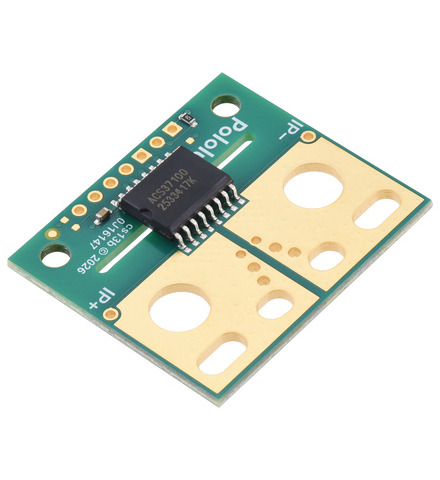
This is the large version of a simple carrier for Allegro’s ACS37100LMATR-050B3 TMR-based, electrically isolated current sensor that offers a high 10 MHz bandwidth with high accuracy, low noise, and typical response times of 50 ns. The typical primary current path resistance of the sensor IC is 1.2 mΩ.
| Part Suffix | Range | Supply Voltage | Sensitivity | Zero Point | Size | PCB layers |
|---|---|---|---|---|---|---|
| 050B3 | ±50 A (bidirectional) | 3.0 V to 3.6 V | 26.4 mV/A | 1.65 V | 1.4″×1.2″ | 6 |
| Pololu item #: 5478 | |
| Brand: Pololu | supply outlook |
| Status: Rationed (Active and Preferred) | |
|
|
|
This is the large version of a simple carrier for Allegro’s ACS37100LMATR-025B3 TMR-based, electrically isolated current sensor that offers a high 10 MHz bandwidth with high accuracy, low noise, and typical response times of 50 ns. The typical primary current path resistance of the sensor IC is 1.2 mΩ.
| Part Suffix | Range | Supply Voltage | Sensitivity | Zero Point | Size | PCB layers |
|---|---|---|---|---|---|---|
| 025B3 | ±25 A (bidirectional) | 3.0 V to 3.6 V | 52.8 mV/A | 1.65 V | 1.4″×1.2″ | 6 |
| Pololu item #: 5793 | |
| Brand: Pololu | supply outlook |
| Status: Rationed (Active and Preferred) | |
|
|
|
This is the large version of a simple carrier for Allegro’s ACS37200LLXTR-100B5 Hall effect-based, electrically isolated current sensor that offers an extra-low-resistance (~0.05 mΩ) IC current path, a 150 kHz bandwidth with <4 µs response time, and an overcurrent fault output with a user-configurable threshold.
| Part Suffix | Range | Supply Voltage | Sensitivity | Zero Point | Size | PCB layers |
|---|---|---|---|---|---|---|
| 100B5 | ±100 A (bidirectional) | 4.5 V to 5.5 V | 20 mV/A | 2.5 V | 1.4″×1.2″ | 6 |
| Pololu item #: 5792 | |
| Brand: Pololu | supply outlook |
| Status: Rationed (Active and Preferred) | |
|
|
|
This is the large version of a simple carrier for Allegro’s ACS37200LLXTR-200B3 Hall effect-based, electrically isolated current sensor that offers an extra-low-resistance (~0.05 mΩ) IC current path, a 150 kHz bandwidth with <4 µs response time, and an overcurrent fault output with a user-configurable threshold.
| Part Suffix | Range | Supply Voltage | Sensitivity | Zero Point | Size | PCB layers |
|---|---|---|---|---|---|---|
| 200B3 | ±200 A (bidirectional) | 3.15 V to 3.45 V | 6.6 mV/A | 1.65 V | 1.4″×1.2″ | 6 |
| Pololu item #: 5756 | |
| Brand: Pololu | supply outlook |
| Status: Active and Preferred | |
|
|
|
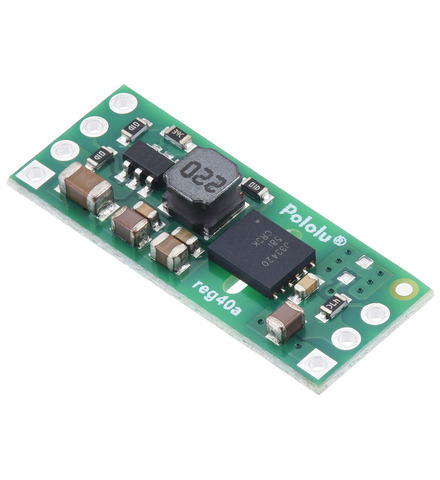
This step-down voltage regulator consists of an input step-down (buck) regulator in front of an isolated DC-to-DC power module. This enables up to 300 mA at 5 V (default) or 5.5 V (selectable) out from a wide 5.5 V to 36 V input.
| Input voltage | Output voltages | Max continuous output current | Size |
|---|---|---|---|
| 5.5 V to 36 V | 5 V (default) or 5.5 V (selectable) | 300 mA | 0.4″ × 1.0″ |
| Pololu item #: 5748 | |
| Brand: Pololu | supply outlook |
| Status: Active and Preferred | |
|
|
|
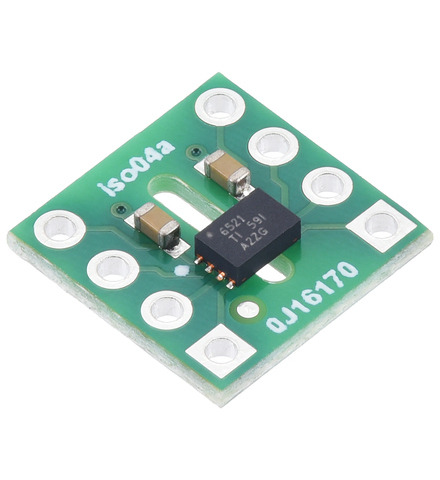
This module is a carrier board for TI’s ISO6521 general purpose functional isolator, which enables two channels of galvanically isolated digital communication between two devices at up to 50 Mbps per channel. It provides one forward channel and one reverse channel, and they default to high in the event of input power or signal loss.
| Pololu item #: 5746 | |
| Brand: Pololu | supply outlook |
| Status: Active and Preferred | |
|
|
|
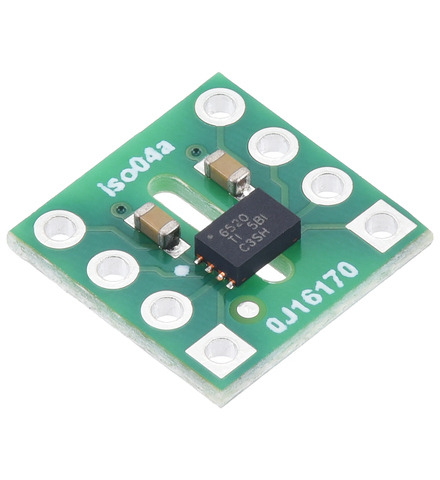
This module is a carrier board for TI’s ISO6520 general purpose functional isolator, which enables two channels of galvanically isolated digital communication between two devices at up to 50 Mbps per channel. Both channels are in the forward direction, and they default to high in the event of input power or signal loss.
| Pololu item #: 5783 | |
| Brand: Pololu | supply outlook |
| Status: Rationed (Active and Preferred) | |
|
|
|
This is the compact version of a simple carrier for Allegro’s ACS37200LLXTR-100B5 Hall effect-based, electrically isolated current sensor that offers an extra-low-resistance (~0.05 mΩ) IC current path, a 150 kHz bandwidth with <4 µs response time, and an overcurrent fault output with a user-configurable threshold.
| Part Suffix | Range | Supply Voltage | Sensitivity | Zero Point | Size | PCB layers |
|---|---|---|---|---|---|---|
| 100B5 | ±100 A (bidirectional) | 4.5 V to 5.5 V | 20 mV/A | 2.5 V | 0.8″×1.1″ | 2 |
| Pololu item #: 5782 | |
| Brand: Pololu | supply outlook |
| Status: Rationed (Active and Preferred) | |
|
|
|
This is the compact version of a simple carrier for Allegro’s ACS37200LLXTR-200B3 Hall effect-based, electrically isolated current sensor that offers an extra-low-resistance (~0.05 mΩ) IC current path, a 150 kHz bandwidth with <4 µs response time, and an overcurrent fault output with a user-configurable threshold.
| Part Suffix | Range | Supply Voltage | Sensitivity | Zero Point | Size | PCB layers |
|---|---|---|---|---|---|---|
| 200B3 | ±200 A (bidirectional) | 3.15 V to 3.45 V | 6.6 mV/A | 1.65 V | 0.8″×1.1″ | 2 |
| Pololu item #: 5759 | |
| Brand: Pololu | supply outlook |
| Status: Active and Preferred | |
|
|
|
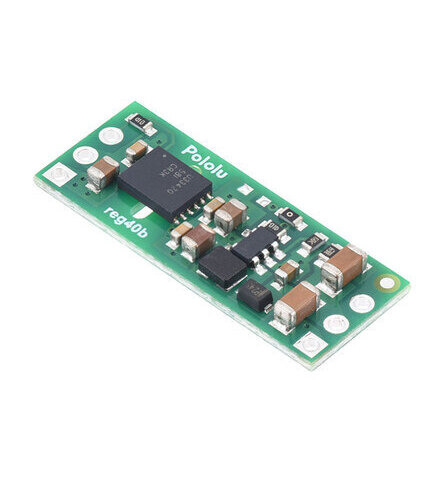
This step-up voltage regulator consists of an isolated DC-to-DC power module in front of a step-up (boost) regulator. This enables up to 100 mA continuous at 12 V out from a 5 V input with full galvanic isolation between the input and output. The 5 V, 300 mA output of the isolation IC is also available.
| Input voltage | Output voltages | Max continuous output current | Size |
|---|---|---|---|
| 4.5 V to 5.5 V | 12 V | 100 mA* | 0.4″ × 1.0″ |
| 5 V | 300 mA* |
* Max current per channel when the other channel current is zero.
| Pololu item #: 5699 | |
| Brand: Pololu | supply outlook |
| Status: Rationed (Active and Preferred) | |
|
|
|
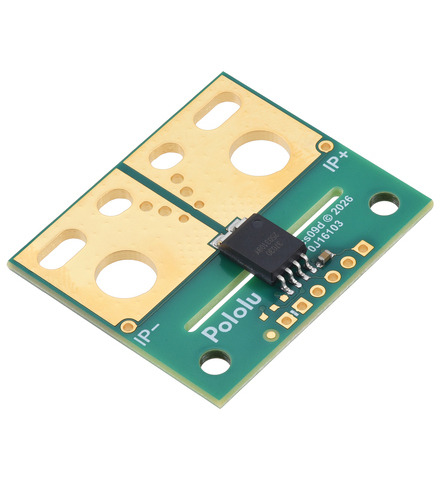
This is the large version of a simple carrier for Allegro’s ACS37030LMYATR-065B3 electrically isolated current sensor that uses two signal paths—Hall effect and inductive coil—to capture both low-frequency and high-frequency information. This allows for a DC through 5 MHz bandwidth and typical response times of 40 ns.
| Part Suffix | Range | Supply Voltage | Sensitivity | Zero Point | IC Working Isolation | Size | PCB layers |
|---|---|---|---|---|---|---|---|
| MY 065B3 | ±65 A (bidirectional) | 3 V to 3.6 V | 20.3 mV/A | 1.65 V | 1000 VRMS | 1.4″×1.2″ | 6 |
| Pololu item #: 5698 | |
| Brand: Pololu | supply outlook |
| Status: Active and Preferred | |
|
|
|
This is the large version of a simple carrier for Allegro’s ACS37030LMYATR-040B3 electrically isolated current sensor that uses two signal paths—Hall effect and inductive coil—to capture both low-frequency and high-frequency information. This allows for a DC through 5 MHz bandwidth and typical response times of 40 ns.
| Part Suffix | Range | Supply Voltage | Sensitivity | Zero Point | IC Working Isolation | Size | PCB layers |
|---|---|---|---|---|---|---|---|
| MY 040B3 | ±40 A (bidirectional) | 3 V to 3.6 V | 33 mV/A | 1.65 V | 1000 VRMS | 1.4″×1.2″ | 6 |
| Pololu item #: 5764 | |
| Brand: Pololu | supply outlook |
| Status: Active and Preferred | |
|
|
|
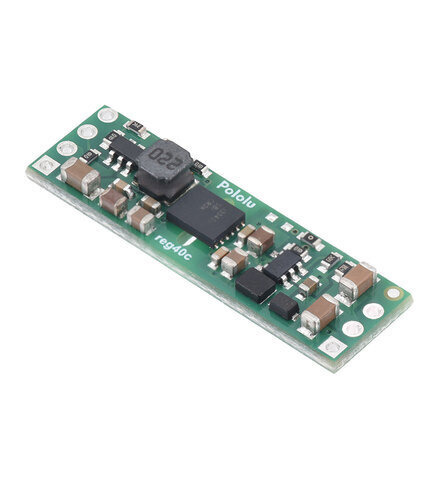
This step-up/step-down voltage regulator consists of an isolated DC-to-DC power module between an input step-down (buck) regulator and an output step-up (boost) regulator. This enables up to 100 mA at 12 V out or 300 mA at 5 V out from a wide 5.5 V to 36 V input.
| Input voltage | Output voltages | Max continuous output current | Size |
|---|---|---|---|
| 5.5 V to 36 V | 12 V | 100 mA* | 0.4″ × 1.3″ |
| 5 V | 300 mA* |
* Max current per channel when the other channel current is zero.
| Pololu item #: 5745 | |
| Brand: Pololu | supply outlook |
| Status: Active and Preferred | |
|
|
|
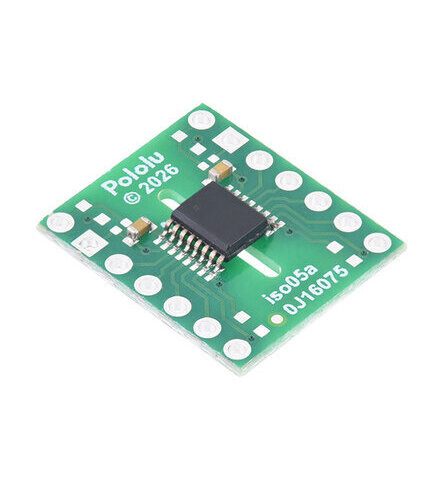
This module is a carrier board for TI’s ISO6542F general purpose functional isolator, which enables four channels of galvanically isolated digital communication between two devices at up to 50 Mbps per channel. It provides two forward channels and two reverse channels, and they default to low in the event of input power or signal loss.
| Pololu item #: 5744 | |
| Brand: Pololu | supply outlook |
| Status: Active and Preferred | |
|
|
|
This module is a carrier board for TI’s ISO6542 general purpose functional isolator, which enables four channels of galvanically isolated digital communication between two devices at up to 50 Mbps per channel. It provides two forward channels and two reverse channels, and they default to high in the event of input power or signal loss.
| Pololu item #: 5743 | |
| Brand: Pololu | supply outlook |
| Status: Active and Preferred | |
|
|
|
This module is a carrier board for TI’s ISO6541F general purpose functional isolator, which enables four channels of galvanically isolated digital communication between two devices at up to 50 Mbps per channel. It provides three forward channels and one reverse channel, and they default to low in the event of input power or signal loss.
| Pololu item #: 5742 | |
| Brand: Pololu | supply outlook |
| Status: Active and Preferred | |
|
|
|
This module is a carrier board for TI’s ISO6541 general purpose functional isolator, which enables four channels of galvanically isolated digital communication between two devices at up to 50 Mbps per channel. It provides three forward channels and one reverse channel, and they default to high in the event of input power or signal loss.
| Pololu item #: 5741 | |
| Brand: Pololu | supply outlook |
| Status: Active and Preferred | |
|
|
|
This module is a carrier board for TI’s ISO6540F general purpose functional isolator, which enables four channels of galvanically isolated digital communication between two devices at up to 50 Mbps per channel. All four channels are in the forward direction, and they default to low in the event of input power or signal loss.
| Pololu item #: 5740 | |
| Brand: Pololu | supply outlook |
| Status: Active and Preferred | |
|
|
|
This module is a carrier board for TI’s ISO6540 general purpose functional isolator, which enables four channels of galvanically isolated digital communication between two devices at up to 50 Mbps per channel. All four channels are in the forward direction, and they default to high in the event of input power or signal loss.
| Pololu item #: 5688 | |
| Brand: Pololu | supply outlook |
| Status: Active and Preferred | |
|
|
|
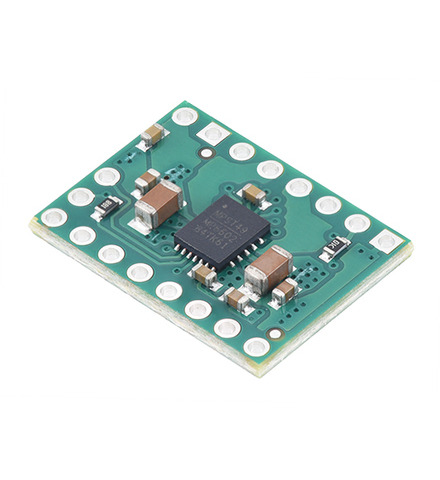
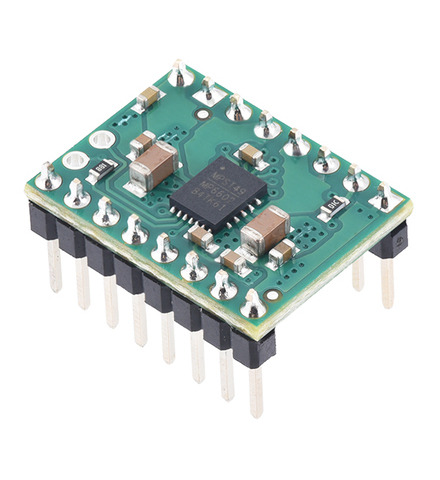
This is a breakout board for the MPS MP6602 microstepping bipolar/unipolar stepper motor driver, which features a serial interface and stall detection. It operates from 4.5 V to 35 V with a maximum current limit of 4 A, which it can run at continuously on our carrier board without a heat sink or forced air flow. The SPI interface allows configuration of the current limit, step mode (6 step modes from full-step through 1/32-step), decay mode off time, and stall detection, and it can also be used for stepper motor control. The driver also features built-in protection against under-voltage, over-current, and over-temperature conditions. This version does not include header pins.
| Pololu item #: 5689 | |
| Brand: Pololu | supply outlook |
| Status: Active and Preferred | |
|
|
|
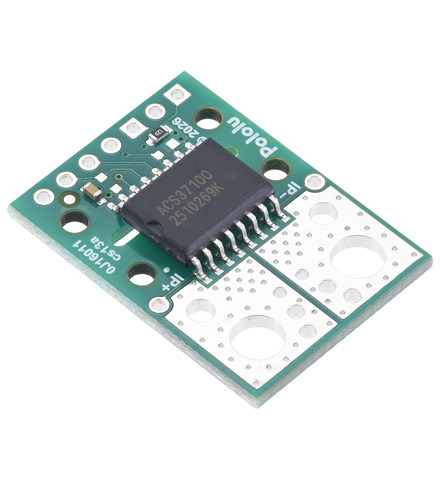
This version of our MP6602 Stepper Motor Driver Carrier ships with male header pins installed, so no soldering is required to use it with an appropriate 16-pin socket or solderless breadboard. Please see the MP6602 Stepper Motor Driver Carrier product page for more information about the driver.
| Pololu item #: 5477 | |
| Brand: Pololu | supply outlook |
| Status: Rationed (Active and Preferred) | |
|
|
|
This is the compact version of a simple carrier for Allegro’s ACS37100LMATR-025B3 TMR-based, electrically isolated current sensor that offers a high 10 MHz bandwidth with high accuracy, low noise, and typical response times of 50 ns. The typical primary current path resistance of the sensor IC is 1.2 mΩ.
| Part Suffix | Range | Supply Voltage | Sensitivity | Zero Point | Size | PCB layers |
|---|---|---|---|---|---|---|
| 050B3 | ±50 A (bidirectional) | 3.0 V to 3.6 V | 26.4 mV/A | 1.65 V | 0.8″×1.1″ | 2 |
| Pololu item #: 5476 | |
| Brand: Pololu | supply outlook |
| Status: Rationed (Active and Preferred) | |
|
|
|
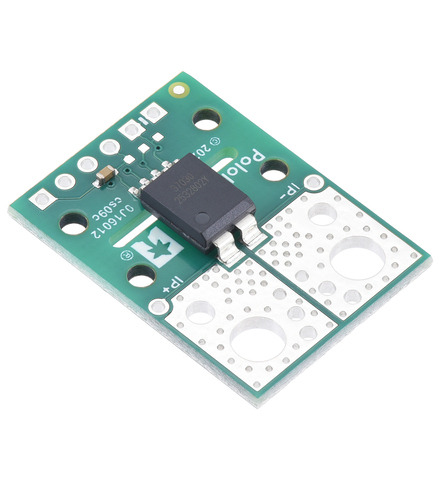
This is the compact version of a simple carrier for Allegro’s ACS37100LMATR-025B3 TMR-based, electrically isolated current sensor that offers a high 10 MHz bandwidth with high accuracy, low noise, and typical response times of 50 ns. The typical primary current path resistance of the sensor IC is 1.2 mΩ.
| Part Suffix | Range | Supply Voltage | Sensitivity | Zero Point | Size | PCB layers |
|---|---|---|---|---|---|---|
| 025B3 | ±25 A (bidirectional) | 3.0 V to 3.6 V | 52.8 mV/A | 1.65 V | 0.8″×1.1″ | 2 |
| Pololu item #: 5696 | |
| Brand: Pololu | supply outlook |
| Status: Rationed (Active and Preferred) | |
|
|
|
This is the compact version of a simple carrier for Allegro’s ACS37030LMYATR-065B3 electrically isolated current sensor that uses two signal paths—Hall effect and inductive coil—to capture both low-frequency and high-frequency information. This allows for a DC through 5 MHz bandwidth and typical response times of 40 ns.
| Part Suffix | Range | Supply Voltage | Sensitivity | Zero Point | IC Working Isolation | Size | PCB layers |
|---|---|---|---|---|---|---|---|
| MY 065B3 | ±65 A (bidirectional) | 3 V to 3.6 V | 20.3 mV/A | 1.65 V | 1000 VRMS | 0.8″×1.1″ | 2 |
| Pololu item #: 5695 | |
| Brand: Pololu | supply outlook |
| Status: Active and Preferred | |
|
|
|
This is the compact version of a simple carrier for Allegro’s ACS37030LMYATR-040B3 electrically isolated current sensor that uses two signal paths—Hall effect and inductive coil—to capture both low-frequency and high-frequency information. This allows for a DC through 5 MHz bandwidth and typical response times of 40 ns.
| Part Suffix | Range | Supply Voltage | Sensitivity | Zero Point | IC Working Isolation | Size | PCB layers |
|---|---|---|---|---|---|---|---|
| MY 040B3 | ±40 A (bidirectional) | 3 V to 3.6 V | 33 mV/A | 1.65 V | 1000 VRMS | 0.8″×1.1″ | 2 |
| Pololu item #: 5694 | |
| Brand: Pololu | supply outlook |
| Status: Rationed (Active and Preferred) | |
|
|
|
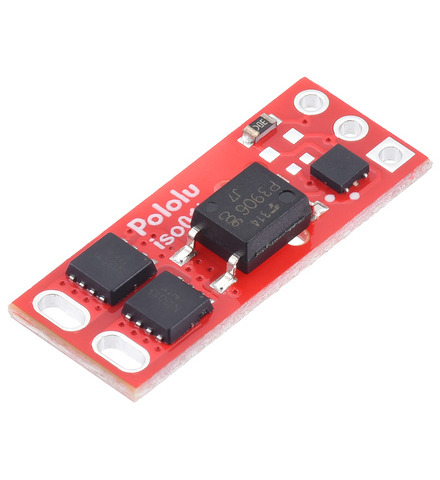
This is the compact version of a simple carrier for Allegro’s ACS37030LMYATR-025B3 electrically isolated current sensor that uses two signal paths—Hall effect and inductive coil—to capture both low-frequency and high-frequency information. This allows for a DC through 5 MHz bandwidth and typical response times of 40 ns.
| Part Suffix | Range | Supply Voltage | Sensitivity | Zero Point | IC Working Isolation | Size | PCB layers |
|---|---|---|---|---|---|---|---|
| MY 025B3 | ±25 A (bidirectional) | 3 V to 3.6 V | 52.8 mV/A | 1.65 V | 1000 VRMS | 0.8″×1.1″ | 2 |
| Pololu item #: 5426 | |
| Brand: Pololu | supply outlook |
| Status: Active and Preferred | |
|
|
|
This solid state relay/switch board provides a way to make and break an electrical connection based on a 2.7 V to 40 V input signal. Its electrically isolated output makes it suitable for various applications where mechanical relays are traditionally used, while its semiconductor-based design avoids many of a mechanical relay’s disadvantages. This version can switch up to 4.5 A of current at voltages up to 100 V (absolute maximum).
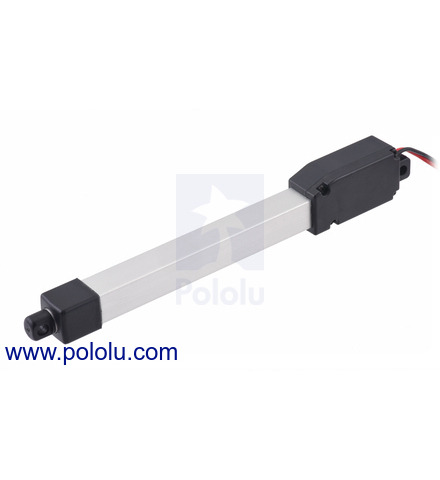
| Pololu item #: 4483 | |
| Brand: Concentric | |
|
|
|
| voltage | stroke length | weight | limit switches | feedback |
|---|---|---|---|---|
| 12 V | 100 mm | 59 g |
| gearbox | max dynamic load |
performance @12 V | |
|---|---|---|---|
| no load | max load | ||
| 50:1 | 2.2 kgf | 28 mm/s, 150 mA | 21 mm/s, 400 mA |


Home | Forum | Blog | Support | Ordering Information | Lists | Distributors | BIG Order Form | About | Contact
© 2001–2026 Pololu Corporation