Robot Kits »
Robot Kits with Soldering
The robot kits in this section require soldering. Because they are not designed specifically as soldering tutorials, these might not make a best first soldering project. However, if you have some soldering experience (or if someone with soldering experience can help you), these kits should be straightfoward to assemble. You’ll need to supply your own soldering equipment and solder; one place to start is the learn to solder kit.
 Compare all products in this category
Products in category “Robot Kits with Soldering”
| Pololu item #: 5004 | |
| Brand: Pololu | supply outlook |
| Status: Active and Preferred | |

|
|

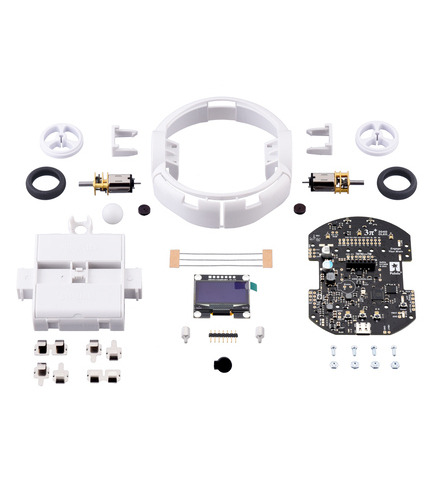
The Pololu 3pi+ 2040 robot is a palm-sized, high-performance mobile platform based on the Raspberry Pi RP2040 MCU, and this kit contains all the parts you need to build the Standard Edition version, including a pair of 30:1 MP 6V Micro Metal Gearmotors. The many features of the 3pi+ include dual quadrature encoders for closed-loop speed or position control, line sensors, front bump sensors, a full IMU (3-axis accelerometer, magnetometer, and gyro), six RGB LEDs, and a graphical OLED display. This product is a kit; assembly (including soldering) is required.
| Pololu item #: 5005 | |
| Brand: Pololu | supply outlook |
| Status: Active and Preferred | |
|
|
|
The Pololu 3pi+ 2040 robot is a palm-sized, high-performance mobile platform based on the Raspberry Pi RP2040 MCU, and this kit contains all the parts you need to build the Turtle Edition version, including a pair of 75:1 LP 6V Micro Metal Gearmotors. The many features of the 3pi+ include dual quadrature encoders for closed-loop speed or position control, line sensors, front bump sensors, a full IMU (3-axis accelerometer, magnetometer, and gyro), six RGB LEDs, and a graphical OLED display. This product is a kit; assembly (including soldering) is required.
| Pololu item #: 5003 | |
| Brand: Pololu | supply outlook |
| Status: Active and Preferred | |
|
|
|
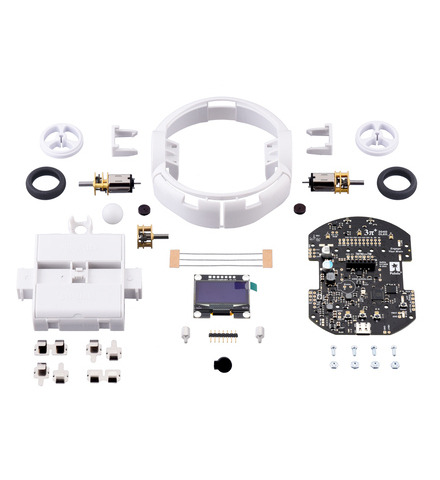
The Pololu 3pi+ 2040 robot is a palm-sized, high-performance mobile platform based on the Raspberry Pi RP2040 MCU, and this kit contains all the parts you need to build the Hyper Edition version, including a pair of 15:1 HPCB 6V Micro Metal Gearmotors. This product is a kit; assembly (including soldering) is required.
NOTE: This version is difficult to control and fast enough to damage itself from impacts, so it is only recommended for advanced users. A spare 15:1 gearbox is included.
| Pololu item #: 4978 | |
| Brand: Pololu | supply outlook |
| Status: Active and Preferred | |
|
|
|
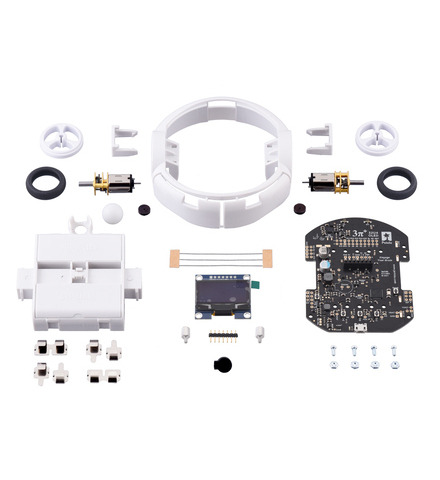
The Pololu 3pi+ 32U4 OLED robot is a complete, high-performance mobile platform based on the Arduino-compatible ATmega32U4 MCU, and this kit contains all the parts you need to build the Standard Edition version, including a pair of 30:1 MP 6V Micro Metal Gearmotors. The many features of the 3pi+ include dual quadrature encoders for closed-loop speed or position control, line sensors, front bump sensors, a full IMU (3-axis accelerometer, magnetometer, and gyro), and a graphical OLED display, all packed into a robot that can fit within the palm of your hand. This product is a kit; assembly (including soldering) is required.
| Pololu item #: 4979 | |
| Brand: Pololu | supply outlook |
| Status: Active and Preferred | |
|
|
|
The Pololu 3pi+ 32U4 OLED robot is a complete, high-performance mobile platform based on the Arduino-compatible ATmega32U4 MCU, and this kit contains all the parts you need to build the Turtle Edition version, including a pair of 75:1 LP 6V Micro Metal Gearmotors. The many features of the 3pi+ include dual quadrature encoders for closed-loop speed or position control, line sensors, front bump sensors, a full IMU (3-axis accelerometer, magnetometer, and gyro), and a graphical OLED display, all packed into a robot that can fit within the palm of your hand. This product is a kit; assembly (including soldering) is required.
| Pololu item #: 4977 | |
| Brand: Pololu | supply outlook |
| Status: Active and Preferred | |
|
|
|
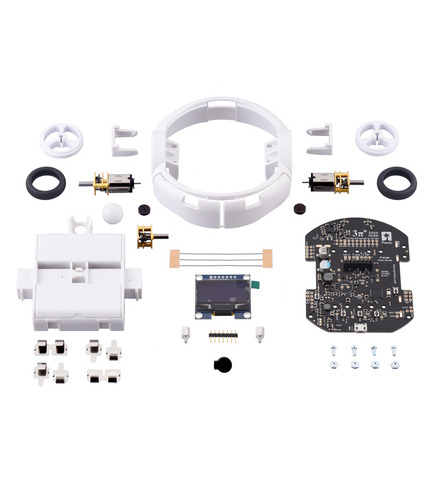
The Pololu 3pi+ 32U4 OLED robot is a complete, high-performance mobile platform based on the Arduino-compatible ATmega32U4 MCU, and this kit contains all the parts you need to build the Hyper Edition version, including a pair of 15:1 HPCB 6V Micro Metal Gearmotors. This product is a kit; assembly (including soldering) is required.
NOTE: This version is difficult to control and fast enough to damage itself from impacts, so it is only recommended for advanced users. A spare 15:1 gearbox is included.
| Pololu item #: 5010 | |
| Brand: Pololu | supply outlook |
| Status: Active and Preferred | |
|
|
|
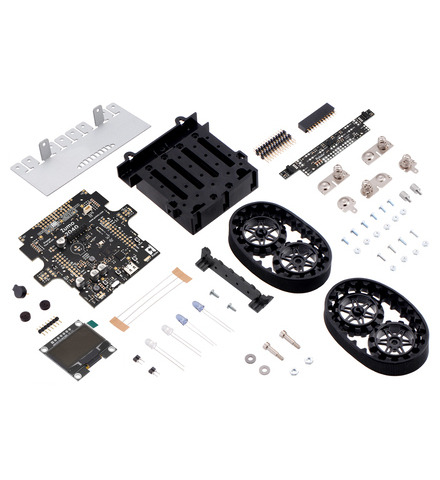
The Pololu Zumo 2040 robot is a versatile tracked robot based on the Raspberry Pi RP2040 MCU, and this kit contains most of the parts you need to build one—all you need to add are a pair of micro metal gearmotors, four AA batteries, and a USB-C cable. It includes integrated dual motor drivers, quadrature encoders, line sensors, side and front proximity sensors, a full IMU, six RGB LEDS, and a graphical OLED display. The assembled robot is less than 10 cm × 10 cm—small enough to qualify for Mini Sumo. This product is a kit; assembly (including soldering) is required.
| Pololu item #: 4990 | |
| Brand: Pololu | supply outlook |
| Status: Active and Preferred | |
|
|
|
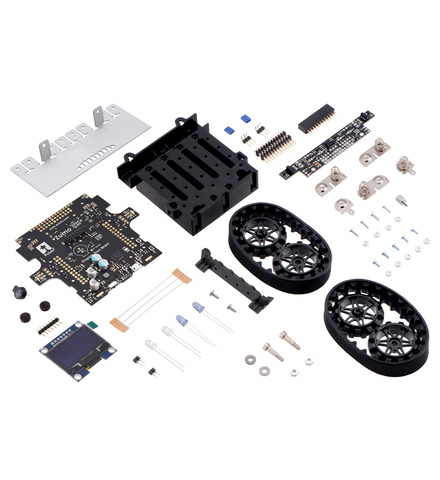
The Pololu Zumo 32U4 OLED robot is a versatile tracked robot based on the Arduino-compatible ATmega32U4 MCU, and this kit contains most of the parts you need to build one—all you need to add are a pair of micro metal gearmotors, four AA batteries, and a USB A to Micro-B cable. It includes integrated dual motor drivers, a graphical OLED display, quadrature encoders, line sensors, side and front proximity sensors, and a full IMU. The assembled robot is less than 10 cm × 10 cm—small enough to qualify for Mini Sumo. This product is a kit; assembly (including soldering) is required.
| Pololu item #: 2509 | |
| Brand: Pololu | supply outlook |
| Status: Active | |
|
|
|

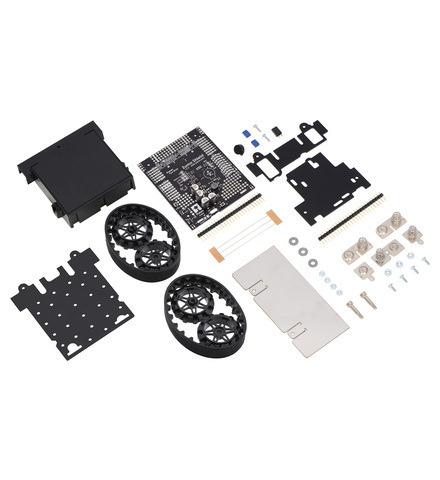
This kit contains most of the parts you need to build an Arduino-controlled Zumo robot. It consists of a Zumo Shield for Arduino, a Zumo chassis kit, and a Zumo blade. You will also need a pair of micro metal gearmotors, four AA batteries, and an A-Star 32U4 Prime or Arduino to complete your Zumo robot (motors, batteries, and Arduino sold separately). This product is a kit; assembly (including soldering) is required.
| Pololu item #: 3575 | |
| Brand: Pololu | supply outlook |
| Status: Active and Preferred | |
|
|
|
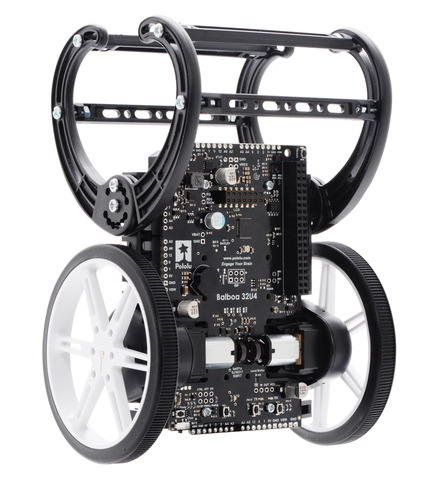
Build your very own programmable balancing robot with the Balboa 32U4 robot kit! The Balboa control board features an Arduino-compatible ATmega32U4 MCU, motor drivers, quadrature encoders, and a full IMU. This board also has the ability to interface with a Raspberry Pi, making the foundation for a complete Raspberry Pi-controlled balancing robot. Motors and wheels are not included: choose your wheels and motors to personalize your robot.
| Pololu item #: 3544 | |
| Brand: Pololu | supply outlook |
| Status: Active and Preferred | |
|
|
|
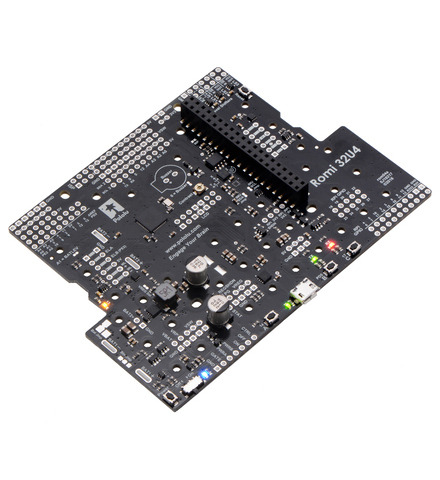
The Romi 32U4 Control Board turns the Romi chassis into a programmable robot based on the Arduino-compatible ATmega32U4 MCU. Its features include integrated dual motor drivers, a versatile power circuit, and inertial sensors, as well as connections for quadrature encoders and an optional LCD. The board also has the ability to interface with an added Raspberry Pi, making the foundation for a complete Raspberry Pi-controlled Romi robot.
Related products


Home | Forum | Blog | Support | Ordering Information | Lists | Distributors | BIG Order Form | About | Contact
© 2001–2026 Pololu Corporation